Categories
2000s Featured Legacies Featured Legacies Home Legacies

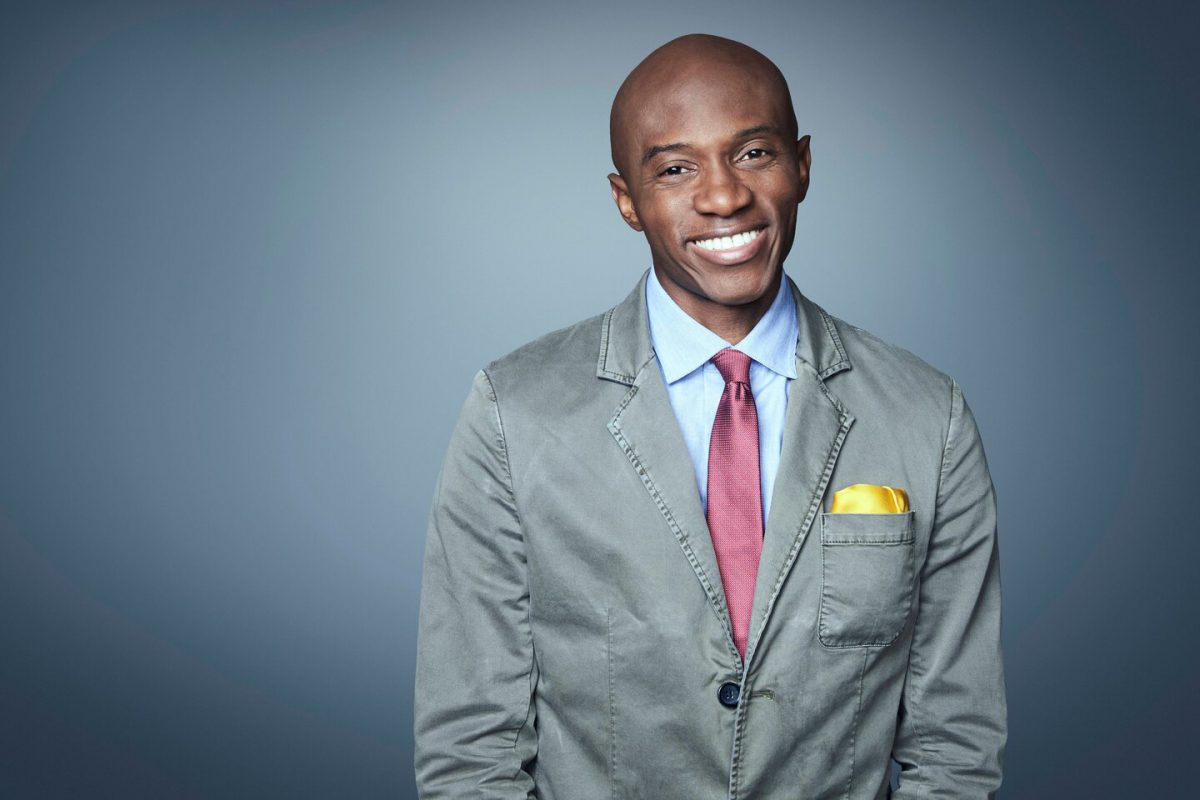
Darran Simon (MSJ04)

Published in the Washington Post – April 10, 2020

Byline: Adam Bernstein, Washington Post
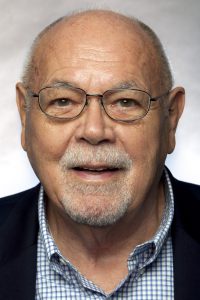
Photo: Darran Simon while at CNN Digital. (Jeremy Freeman/CNN)

Darran Simon, a journalist who developed an expertise reporting on trauma during a wide-ranging career that had recently brought him to The Washington Post, where he covered District politics and government, died April 9, 2020. He was 43.

Simon was born in England and spent his childhood in the South American nation of Guyana and in New Jersey. In his professional life, he displayed restless curiosity as well as deep compassion for people who had endured natural catastrophe and man-made violence.

“I am drawn to writing about suffering and trauma,” he once noted, “because I am in awe of the human spirit’s ability to persevere.”
After two years as the Miami Herald’s minority affairs reporter, he moved to New Orleans in 2007 as an education reporter for the Times-Picayune, compelled to document the aftermath of Hurricane Katrina. “Down the road, 35 years from now, when memories are all I have,” he told the University of Rhode Island alumni magazine, “I’ll be able to look back at this time and remember this experience.”

He wrote about school reconstruction and covered accountability issues as well as the upending of students’ lives in a city of dramatic inequities even before the storm. “History often depends on who is telling it,” he said. “My role is to try to understand it and paint a full picture.”

A reserved and conscientious reporter, he went on to cover crime for the Philadelphia Inquirer, was a general assignment reporter for Newsday, and was a senior writer with CNN Digital in Atlanta focusing on national and international breaking news before starting March 2 on The Post’s Metro staff.

In covering the city government’s preparations for handling the coronavirus outbreak, he reported on official pronouncements as well as delivering humane accounts of local victims of the disease, including a former “Jeopardy” contestant.

“Darran had an immediate impact at The Post with his talent, grace and earnest devotion to his work,” said Mike Semel, The Post’s top metro editor. “He was here barely a week when the city he was covering shut down because of coronavirus. But he forged ahead and found great stories to tell.

“Despite his short tenure,” Semel continued, “we entrusted him to write the main coronavirus news story several times over the past couple of weeks — taking feeds from his colleagues and weaving those into a coherent story. He worked so well with everyone and was a graceful, fluid writer. But beyond that, he was just a nice guy with an electric smile.”

Darran Anthony Simon was born in London to Guyanese students on March 18, 1977. He lived in Guyana until he was 9 before the family settled in Iselin, N.J. His mother is a middle-school teacher and his father, an accountant, is a securities regulator for the Financial Industry Regulatory Authority.

At the University of Rhode Island, Simon was on the men’s track and field team, won awards for student leadership and shared a top prize from the Association of Social and Behavioral Scientists for a comparative study on black student activism in the 1970s and the 1990s. He graduated in 1998 with a bachelor’s degree in English and, energized by his work on the campus newspaper, received a master’s degree in 2004 from Northwestern University’s journalism school.
His marriage to Karin Pryce ended in divorce. Survivors include his parents, Stephen Simon and Jacqueline Simon, both of Iselin; a brother; a sister; and a grandmother.

Simon brought particular sensitivity to follow-up interviews after a tragedy that served to humanize statistics. One example, for CNN, was a profile of the spiritual leader who took over the flock of Emanuel African Methodist Episcopal Church in Charleston, S.C., after a white supremacist killed nine members, including its pastor, in 2015.

In July 2019, Simon was among 15 journalists chosen from about 300 applicants for the week-long Ochberg Fellowship at Columbia University journalism school’s Dart Center for Journalism and Trauma.
Dart Center Executive Director Bruce Shapiro called him a “quiet, curious and very deeply engaged journalist” who had spent years writing about survivors of violence in some of the toughest cities in the United States, from New Orleans to Camden, N.J., and how they cope with those experiences.

For all his drive to make loss more intimate, or perhaps because of it, Mr. Simon was also known as a roving epicure with a sharp understated cool to his wardrobe and an ear for sumptuous music. On his website,  Simon described himself as a “a foodie and a jazz lover who will travel anywhere for a good meal and a horn section.”

Categories
Features Medill News

Medill News April 2020

April 2020 News

Medill IMC Thought Leaders is proud to feature “IMC in a Changing World,” a series on marketing and leadership advice in the midst of the COVID19 epidemic and our new reality. We are grateful to our professors for their generosity in sharing practical advice for these challenging times.⁠ ⁠ We hope you and your family and friends are doing well and staying safe!⁠ ⁠ Follow along with the series on our LinkedIn page linked in the bio above, where you can also send us your questions. ⁠ ⁠ #IMCInAChangingWorld #MedillIMCThoughtLeaders #Medil #MedillIMC #COVID19

Patti Wolter has been named by the Provost as a Charles Deering McCormick Distinguished Professor of Instruction. This honor is awarded annually to a group of faculty members in recognition of their  extraordinary teaching and service to the university. In naming Patti to the 2020 class of CDM Professors, the provost noted not only her exemplary teaching, but also her mentorship of students, alumni and younger faculty, as well as her leadership in matters of curriculum reform and her connections to some of the country’s most prestigious media outlets. Her three-year appointment as a Charles Deering McCormick Professor begins in September.  A ceremony installing all of the CDM honorees will be held in the fall.

Medill senior lecturer Alex Kotlowitz’s  “An American Summer: Love and Death in Chicago” a trenchant examination of the social and emotional toll that gun violence exacts on both victims and perpetrators, has won the J. Anthony Lukas Book Prize, bestowed by Columbia University and the Nieman Foundation for Journalism at Harvard. Established in 1998, the Lukas Prize recognizes excellence in nonfiction that “exemplifies the literary grace and commitment to serious research and social concern” that characterized the work of the award’s namesake, J. Anthony Lukas, a Pulitzer Prize-winning author and investigative journalist who died in 1997.

The Northwestern News Network (NNN) took first place in Best Newscast category of the Region 5 SPJ student contest and will now move on to the national SPJ competition. Joey took first place General News Reporting category for a story she did as a reporter, not as an intern,  for the NBC affiliate in Bakersfield, California last summer. Region 5 comprises chapters in Illinois, Indiana and Kentucky.

Finding Yingying , which tells the story of Yingying Zhang, a 26-year-old Chinese student who disappeared at University of Illinois in 2017, won the Special Jury Recognition for Breakthrough Voice Award at the South by Southwest Film Festival (SXSW).  This feature-length documentary by Jiayan “Jenny” Shi (MSJ17) began as an MSJ student short in a graduate documentary class that went on to win a College Emmy and be nominated for a Student Academy Award.

Categories
Features Home Medill News

Medill Alums Win 2020 Pulitzer Prizes – Individual and Teams

Congratulations to Medill alumnus Brian M. Rosenthal (BSJ11) of The New York Times on receiving the 2020 Pulitzer Prize in Investigative Reporting for his work on the New York City taxi industry. His reporting found that drivers had been the victim of predatory lending resulting in nearly a thousand bankruptcies and several suicides. His series has led to the proposal of a $500 million bailout for drivers.
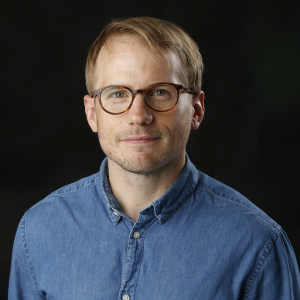
Rosenthal has been an investigative reporter on the Metro desk of The New York Times since May 2017. He covered state government for The Houston Chronicle between 2014 and 2016 and for The Seattle Times between 2011 and 2013. While in Houston, he was on the team that was a finalist for the Pulitzer Prize in Public Service for a series that exposed that Texas was systematically denying special education services to tens of thousands of children with disabilities. While in Seattle, he was part of a reporting team that won the Pulitzer Prize in Breaking News for coverage of a mudslide that killed 43 people. He also has won a George A. Polk Award and the Selden Ring Award for Investigative Reporting.

Read Rosenthal’s comments about the win: https://www.nytco.com/press/2020-pulitzer-prize-remarks-from-brian-m-rosenthal/

In addition to Rosenthal, Evan Hill (BSJ07), a member of the New York Times Visual Investigations team, was lead reporter on a New York Times investigation into the Russian bombing of Syrian civilians that won a 2020 Pulitzer Prize for international reporting, as well as a George Polk Award for international reporting on February 19. The Pulitzer jury recognized the Visual Investigations team for two stories that proved, for the first time, that the Russian Air Force was responsible for a series of attacks on hospitals and other civilian sites in opposition-held Syria.
Andy Wolfson, (MSJ78), a reporter in Louisville at The Courier Journal, was a member of a team that won a 2020 Pulitzer for breaking news reporting for a story about hundreds of pardons issued by a lame duck governor, including for murderers, rapists and campaign supporters.

Also honored May 4 as part of a Pulitzer-winning team was Lori Montgomery (BSJ84), now deputy national editor at The Washington Post. The Post’s staff won the Pulitzer for Explanatory Reporting for a series that showed the effects of extreme temperatures to the planet (found here: https://www.washingtonpost.com/graphics/2019/national/climate-environment/climate-change-america/).
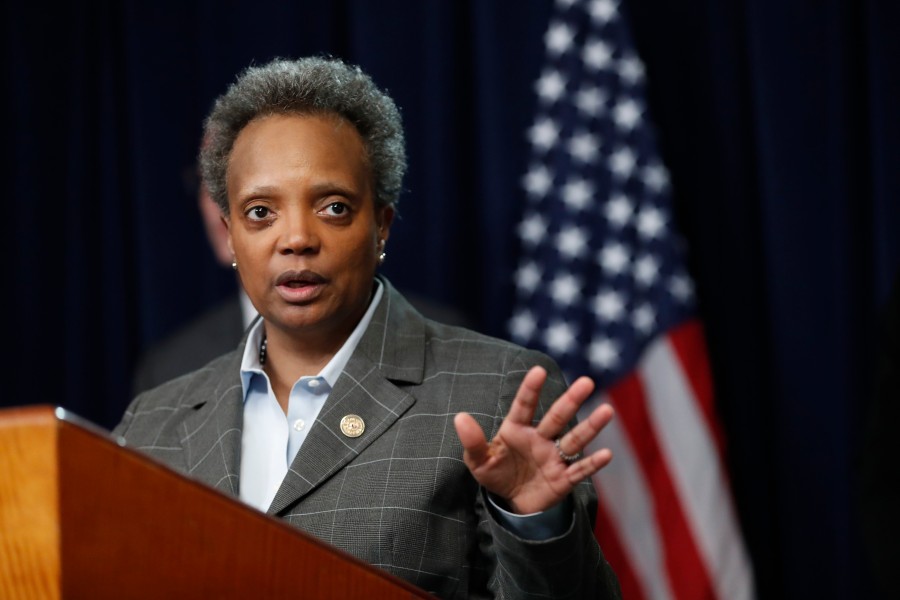

Photo Credits

Rosenthal photo: Pulitzer.org
Hill photo: Evan Hill 

Montgomery photo: WashingtonPost.com

Categories
Features Medill News

Medill News Highlights – May 2020

Northwestern’s 2020 Commencement will be Virtual with Student Option to Return for On-Site Ceremony Next Year

Read the announcement by President Schapiro.

Presentation of the John Bartlow Martin award for public interest magazine journalism and conversation with winner

Join us as Medill’s Helen Gurley Brown Magazine Professor Patti Wolter presents the 2020 John Bartlow Martin Award to Lizzie Presser  of ProPublica for her story “The Dispossessed.” A conversation with Presser will follow. Presser is a journalist writing about inequality and how social policy is experienced. She was previously a contributing writer at The California Sunday Magazine. “The Dispossessed,” published in partnership with ProPublica and The New Yorker, is an investigation into the unjust repossession of African American-owned property through three different legal mechanisms in North Carolina. It won a George Polk Award for Magazine Reporting in 2020. Presser has twice been a finalist for a National Magazine Award and a Livingston Award.

Register for the 5/27 Zoom presentation.

Medill team wins Best Article Award from American Academy of Advertising

Online retailers must strike a balance between recommending relevant items to users and providing sponsored recommendations from advertisers. Recognizing this problem, a team at Medill IMC’s Spiegel Research Center developed an algorithm that improves user utility while reducing ad revenue by a small amount. The team consisting of Professor Ed Malthouse, postdoctoral fellows Khadija Ali Vakeel and Yasaman Kamyab Hessary, research fellow Morana Fudurić and Professor Robin Burke from University of Colorado Boulder were recently recognized for their work, receiving the 2019 Best Article Award in the Journal of Advertising from the American Academy of Advertising. The award was instituted in 1988 to honor the best article published each year.

Read the abstract

NNN Wins SPJ Award

The Northwestern News Network (NNN)  took first place in Best Newscast category of the Region 5 SPJ student contest and will now move on to the national SPJ competition. Joey took first place General News Reporting category for a story she did as a reporter, not as an intern,  for the NBC affiliate in Bakersfield, California last summer. Region 5 comprises chapters in Illinois, Indiana and Kentucky.

Prof. Jack Doppelt Co-Produces Election Report

What began as “Can American Democracy Survive the 2020 Elections? The Role of Media, Law, Norms, and Technology in Assuring Acceptance of Election Results,” evolved to “Fair Elections During a Crisis: Urgent Recommendations in Law, Media, Politics and Tech to Advance the Legitimacy of, and the Public’s Confidence in, the November 2020 U.S. Elections.  Read a New Yorker article about the report. Read the report.
Participate in the Medill Centennial Alumni Photo Gallery          

We plan to feature testimonials and photos from 100+ alumni on our Centennial website, launching this summer.  If you want to participate, please submit your quote and photo using this form! We would love to include you.

Lightfoot photo: WBEZ 

Categories
1990s Featured Legacies Featured Legacies Home Home

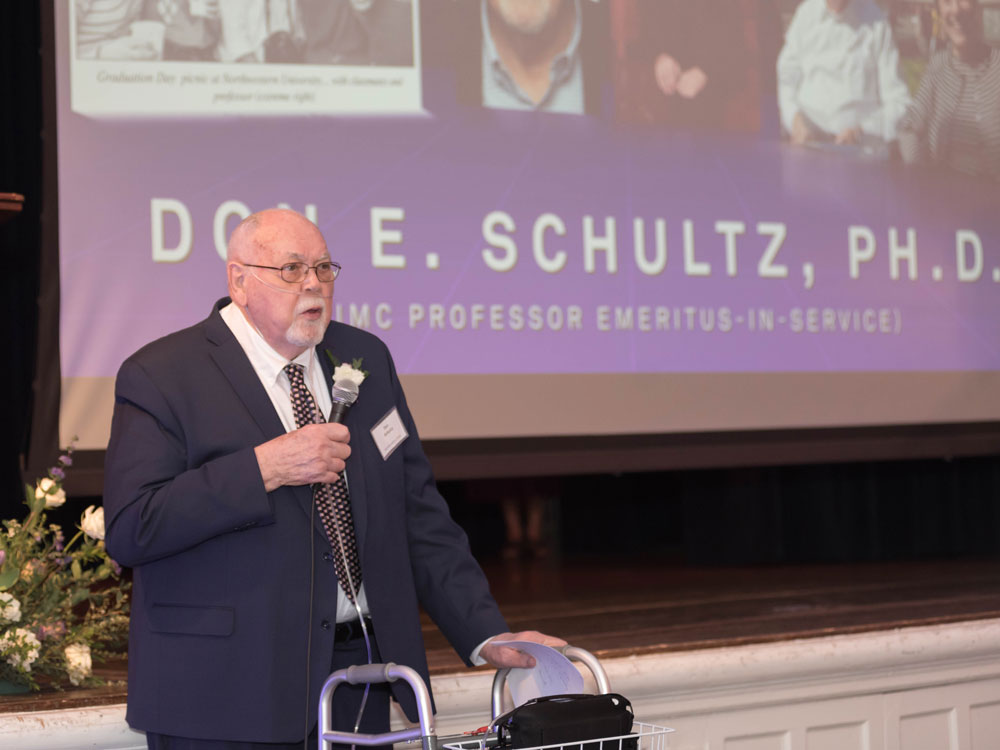
Professor Emeritus Don E. Schultz

Don E. Schultz, professor emeritus of Integrated Marketing Communications at Northwestern University Medill School of Journalism, Media, Integrated Marketing Communications, died June 4. He was 86. Schultz, a longtime faculty member, was a pioneer in the field of integrated marketing communications and had worldwide influence on how businesses approach marketing.

Schultz joined the Medill faculty in 1977. At Medill, Schultz chaired the Department of Advertising in the mid-1980s. He was one of the faculty members who led the consolidation of the school’s advertising, direct marketing and public relations curricula in the late 1980s. In 1991, Medill launched the first graduate-level integrated marketing communications program in the United States. He is commonly referred to as the “father of IMC” around the world.

“Don Schultz was a pioneer of integrated marketing communications, and he helped guide our venerable Medill School toward one of the most important new areas of scholarship and education for our era,” said Northwestern University President Morton Schapiro. “We will forever be grateful for his contributions to Medill and to our University.”

“Don was an academic leader and a prodigious researcher,” said Medill Dean Charles Whitaker. “IMC was his vision and he worked diligently to spread it globally. Scholars and marketers around the world are indebted to Don for how he shaped the industry.”

A prolific scholar, Schultz consulted, lectured and held seminars on integrated marketing communications, marketing, branding, advertising, sales promotion and communication management in Europe, South America, Asia/Pacific, the Middle East, Australia and North America. He is the author/co-author of 28 books, including the seminal “Integrated Marketing Communication: Putting It Together and Making It Work,” as well as “IMC: The Next Generation,” “Brand Babble,” and “Understanding China’s Digital Generation,” among others.

He is one of the most cited marketing communications thought-leaders, with more than 150 academic, professional and trade articles. He was the founding editor of the Journal of Direct Marketing (now the Journal of Interactive Marketing) and a featured columnist in Marketing News and Marketing Insights. He was on the editorial review board of a number of trade and scholarly publications.

“Don constantly challenged the status quo, including his own work,” said Medill Associate Dean for IMC Vijay Viswanathan. “Very few academics and researchers have the humility to do that. Don had an incredible charisma and an ability to connect with people of different cultures. While IMC had core ideas, he always encouraged marketers to adapt IMC for audiences and brands all over the world. He was deeply committed to innovation in both marketing and teaching.”

Schultz’s reach went well beyond the United States. He served as a visiting professor at schools ranging from the University of Beijing and Tsinghua University in China, to Queensland University of Technology in Australia, the Hanken School of Economics in Helsinki, Finland, Cranfield School of Management in the UK, and to the University of Chile in Santiago.

Schultz was an active participant in industry service, including serving as chair of the Sales Promotion and Marketing Association of America and past chairman of the Accrediting Committee for the Accrediting Council in Journalism and Mass Communications. He was also a member of the American Marketing Association, American Academy of Advertising, Advertising Research Foundation, Association for Consumer Research, Business Marketing Association, Direct Marketing Association and the International Advertising Association.

“Real thought leadership takes a very rare combination of things all of which are true about Don Schultz — bravery, courage and willingness to say the sometimes unwelcomed thing. Learned, wise and skeptical. Smart, clever and, ideally, continuously improving,” said Tom Collinger, associate professor and executive director of the Medill IMC Spiegel Research Center. “Because Don Schultz was all of these things, the marketing and communications industry benefitted. And Medill benefitted. And the University benefitted. And there’s the audience that benefitted most: the 30-plus years of alumni all over the world practicing in their profession because of Don’s thought leadership. To say he will be missed would be a gross understatement, but his fingerprints will not just live in the past, but forever be encouraging our future.”

Schultz received numerous honors, including the Distinguished Faculty Achievement Award from Northwestern in 2010 and being inducted into Medill’s Hall of Achievement in 2019. He was given the Ivan Preston Award for Outstanding Advertising Research Contribution by the American Academy of Advertising in 2014 and was named Outstanding Alumni of Michigan State University in 1988, Direct Marketing Educator of the Year in 1989, Distinguished Advertising Educator in 1992, Sales and Marketing Executive of the Year in 1996, and one of the top 80 Marketing Leaders by Sales and Marketing Management Magazine in 1998. In 2020, he was named a Fellow of the Australian and New Zealand Academy of Advertising.

He also was President of Agora, Inc., a global marketing, communication and branding consulting firm headquartered in Chicago.

Schultz is survived by his wife, Heidi, who was his business partner and co-author on several books. He also is survived by his sons Steven, Bradley and Jeff, as well as seven grandchildren Dory, Emily, Jacqueline, Colin, Benjamin, Daniel and Isabel.

In the coming months, Medill and the Northwestern community will come together to celebrate Schultz’s life and legacy.

Gifts given in memorial will be added to an endowed fund in IMC being created by Don and Heidi Schultz. To contribute, you may donate online or mail a contribution to:

Northwestern University
Alumni Relations and Development
1201 Davis Street
Evanston, IL 60208

Categories
1940s Featured Legacies Featured Legacies Home Legacies

Murray Olderman (MSJ47)

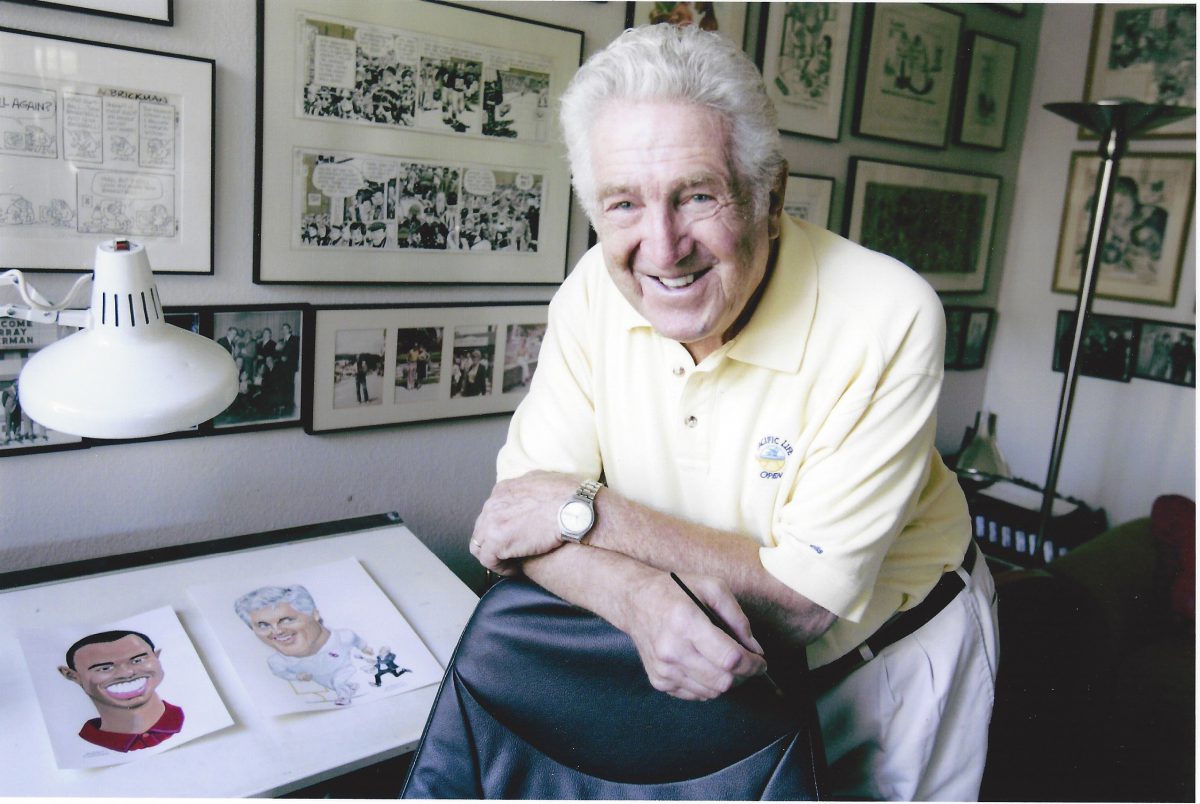
Murray Olderman, an author and journalist who for more than six decades chronicled the sports world with his nationally syndicated cartoons in addition to writing features and columns, died on Wednesday in Rancho Mirage, Calif. He was 98.

Olderman was inducted into Medill’s Hall of Achievement in 2015. He traveled to Chicago to receive his award.

Olderman graduated as a journalism major from the University of Missouri. He received another bachelor’s degree from Stanford, where he studied French in a World War II Army program and was a member of Phi Beta Kappa. After the war, he obtained his master’s from Medill.

From Mickey Mantle to Joe Namath and Bear Bryant to Tiger Woods, Olderman  covered them all. For 35 years he was a syndicated columnist and cartoonist whose work was distributed by Newspaper Enterprise Association to 650 daily newspapers. After serving as executive editor of NEA, he retired from the syndicate but remains active as a writer and artist.

One of the leading national authorities on pro football, Olderman was a past president of the Football Writers Association of America and the founder of the Jim Thorpe Trophy (for the NFL’s most valuable player) and the Maurice Podoloff Trophy (for the NBA’s MVP). His football murals hang in the Pro Football Hall of Fame at Canton, Ohio. He was inducted into the National Sportscasters and Sportswriters Hall of Fame, the International Jewish Sports Hall of Fame, and is in the writers’ wing of the Pro Football Hall of Fame.

In 2013, he published a personal account of his time in the war. “A year apart…Letters from War-Torn Europe,” featured his letters to his wife written from Europe at the end of World War II with added insight into his experience abroad and his family.

He is survived by his daughter Lorraine and another daughter, Marcia Linn; a son, Mark; a sister, Diane Morton; five grandchildren; and three great-grandchildren. His wife, Nancy (Calhoun) Olderman, died in 2011.

https://www.nytimes.com/2020/06/11/sports/murray-olderman-dead.html

Photo: Taya Lynn Gray/The Desert Sun

Categories
Features Home

Spring Immigrant Connect Class Chronicles Pandemic’s Effect on Immigrant and Refugee Communities

The spring of 2020 brought fear, death and grief to hundreds of thousands across the globe. In the few months that the second year undergraduate journalism students taking Professor Doppelt’s spring 301 writing and reporting Immigrant Connect course were getting to know immigrants and refugees, more than 400,000 people died of the coronavirus pandemic. More than ¼ of them died in the U.S.

As the class was meeting for the first times in early April, they decided to focus our reporting on the pandemic’s effect on different immigrant and refugee communities.

What the group came to realize is that one of the potential effects of a global pandemic is to recognize that the experiences of migration and decisions about cross-national travel may pull the U.S., willingly or not, out of its exceptionalist posture and into a more cooperative arena.

Here are their stories on how the COVID-19 pandemic has affected different immigrant and refugee communities:

How have Chinese students handled what to do as the spread of COVID-19 limited their options to return to China? By Connie Deng 

Are people turning to traditional Chinese medicine during the coronavirus pandemic? By Lydia Rivers

How have Korean Americans prepared for COVID-19?  By Chloe Jeonghyun Heo

How have Indian grocery stores been impacted by COVID-19? By Rachel Baldauf

How have African refugees coped with COVID-19?  By Michael Fitzpatrick

How did COVID-19 affect Ramadan celebrations in the Arab American community around Dearborn, Michigan? By Bailey Pekar

Categories
Home My Medill Story

Malika Bilal (BSJ06) – Host/Producer, Al Jazeera English

By Arudi Masinjila  (BSJ21)

Malika Bilal had always known that she wanted to be a journalist. As a child, she would cut and paste pictures from magazines to make her own for the readership of her younger sister. “I don’t know if I knew what journalism was, but I definitely knew this field of writing and producing was something I wanted to do,” she recalls.

Born into a family with a documentarian father and an elder sister in broadcast, the field was not foreign to her. When the time came to apply to college, Northwestern University was her first-choice school. With its journalism program and proximity to home, it felt like a perfect fit, despite people’s reservations about it.

“At the time there weren’t a lot of places that offered a journalism undergrad program so people didn’t really understand how you could go to a school and get a journalism degree afterwards. It was like, ‘you’ll go to school for something and then you’ll go to graduate school for journalism.’ I already know I want to be a journalist. Why would I waste that time?” says Bilal. “I knew that I wanted to go there then it became everything I wanted it to be.”

While at Medill, Bilal was on the newspaper track, in line with her ambition to work for the Chicago Tribune or Chicago Sun Times. “I’m from Chicago so those are my two hometown papers and it just made sense,” she says. Though she was sure that she wanted to do newspaper, she also dabbled in other mediums as an intern at Northwestern News Network, the school’s student-run broadcast station, and reporter for the alumni magazine.

But when she graduated in 2006, her certainty turned into doubt in the face of an impending recession that made it difficult to find a job. “I’m freaking out because I’m thinking, I’ve just spent so much of my parents’ money on a journalism degree, I probably should’ve become a doctor because then there’s a guaranteed path to what’s next. And here I am, I can’t find a job,” Bilal recalls. She eventually found a paid radio broadcasting internship in Washington D.C. with Voice of America. Despite it not being exactly what her heart was set on initially, she credits it as one of the best decisions she’s ever made. It introduced her to the world of international news and was a steppingstone towards other opportunities in the field. “I loved [it] so much and then that led me to a job on a website, so doing online journalism, but also international news. It was like a domino effect and just spiraled from there,” she says.

Bilal’s next major career move came three years later, when a friend from her junior year study abroad program in Cairo encouraged her to apply for a job at the then relatively new Al Jazeera English station headquartered in Doha, Qatar. “I had been watching the headlines since they opened; I knew that I wanted to work there. That was my dream job so as soon as he messaged, I was like, ‘this is a sign,’” she says.

She applied and got the job and after many months of visa processing and paperwork, moved to Doha as an online producer. But the decision to move was not an easy one, as her initial excitement at pursuing her dream job was temporarily dampened by some of her peers’ skepticism about her relocation. “I got so much feedback from people like, ‘you’re gonna move across the world? How are you gonna get married? Are you gonna find someone over there? You’re really ruining your chances. This is the time you should be looking for a husband, this is not good for you.’ And that really scared me,” Bilal says. Deciding to not let this deter, she took up the opportunity.

She was promoted to assistant editor within a year, and later moved from web to broadcast as co-host and producer of “The Stream,” a daily panel-style program on current events. She considers this one of her career milestones, not just because she began hosting a show much earlier than she expected, but also because she was the first person at the channel to wear a hijab on screen. She had anticipated this would arouse some controversy, though it turned out not to.

“I was so nervous cause I’m thinking, ‘maybe one boss didn’t notice that someone gave me a job and they’re going to come in and say no we don’t want her on air’ or they’re going to get lots of feedback from people saying, ‘why do you have this girl in a scarf presenting the news? She’s biased or we don’t want her,’” she says. “But none of that ever happened so I think that was the biggest milestone. It’s hard to top that one.”

Aside from providing a platform for discussion, the show also offered a chance for citizens to hold people in power accountable. “My favorite stories are when we gave people a chance to speak to their elected representatives and have their say when they would be no other platform and no other way for them to do that,” she says.

After an eight and a half year run at “The Stream”, she switched mediums again and now hosts “The Take,” a news podcast, from Washington D.C. “I’ve now worked in every single medium that there is in journalism, which is great, I love it!” says Bilal.

Arudi Masinjila is a rising senior at Medill. She is passionate about using journalism for positive social change.

Categories
Home My Medill Story

Kelly Brockmeier (IMC19) How a start in news production led to an IMC degree

By Kelly Brockmeier (IMC19)

My mom used to tell me, “you can’t feed the neighborhood.” I was born a helper. I have a heart for the underdog, the disadvantaged, the lost—you get it. I’m still an idealist in many ways. I was also the kid that asked “why,” a LOT. I was destined to be a journalist, and boy was I good at it.

In my late 20s, I inadvertently landed an Executive Producer role. I never set out to be in management, it just happened. And not long after, I advanced to Assistant News Director. If you’ve worked in news you understand the job IS your life. The hours are grueling, and the pay can be really poor but that’s not why you sign up for this. It’s a calling.

In 2004, my news career suddenly ended. I didn’t know it was ending forever but it did.

Long story short, my boss told me it was either me or him. Brutal right? That’s the news business. My sudden unemployment opened a door to consider all my possibilities and I did just that. Somehow despite being fearful of doctors and needles and healthcare in general, I found myself smack dab in the middle of an academic medical center. My news skills translated nicely in the PR world and then eventually into a marketing leadership role. My secret sauce? The ability to identify and tell great stories across mediums, platforms and positions.

In 2015, I began interviewing for C-suite roles and most called for an advanced degree, something I did not have and honestly did not want. I was not keen on going back to school to check a box. I investigated lots of MBA programs and knew it was not the right fit. I even met with various universities. I had all but given up when one night I was served an online ad from Medill IMC. I knew about Northwestern as a journalist, it was a top program in the country. Additionally, my brother-in-law had played football at NU. He died suddenly in 2012 and there was an emotional tie to the university thanks to Coach Fitzgerald and his incredible staff and team who honored Leon Brockmeier by wearing his initials on their helmet that season. Without much thought as to how I would pay for this degree, I hastily applied as I sat on the couch one evening. I remember telling my husband what I had done, he sincerely thought I was joking.

As I waited for word on whether I had been accepted, I recalled the University President speaking at a pep rally during a bowl game in Jacksonville, Fla.,in January 2013. He talked about the academic prowess of NU. My brother-in-law often reminded us that his bachelor’s degree from NU was equivalent to his wife’s master’s degree from Florida State University. As we sat and heard Morty Schapiro list off stats on the student body we suddenly realized Leon hadn’t just been bragging—it was legitimate. I had hoped that maybe someday my son might go to NU to honor his uncle, but NEVER did I think it would be me. In 2013, I had zero aspirations to go back to school and even if I had, NU did not seem attainable.

Fast forward to 2016 and I get an acceptance letter. My NU journey began at age 45! To date it’s the largest single investment of time and money I have ever spent on myself and it was worth every penny. In the summer of 2019, I walked across the same football field my brother-in-law called home with his cardiac Cats. This time the heart attack was all mine as I donned the purple and officially graduated from NU with a master’s in Integrated Marketing Communications. It’s equivalent to a Ph.D. in some books! I still pinch myself, but the pictures prove it happened—I did it!

Immediately after my last class ended at NU in San Francisco, I took a job with Wounded Warrior Project as their national Director of PR & Social Media. My new chapter is well underway and I’m doing what I do best—telling meaningful stories and helping those most in need. The cool kids call that #winning, or so I’m told.

Learn more about my career journey by visiting www.kellybrockmeier.com.


Categories
Home Medill Research Uncategorized

Medill student internship research project findings in the Chicago Tribune

Employers, don’t cancel those internships — make them remote

By Melissa Santoyo (BSJ23)

When COVID-19 first hit the U.S., I was extremely fortunate that the pandemic only ruined the spring quarter of my freshman year and my summer study-abroad plans. But as a low-income, first-generation college student, I scrambled to find something to fill the few months of vacation. Because whereas my wealthier peers could probably afford to spend a summer unemployed, I am constantly racing against the clock, asking myself, “How long do I have until graduation and what can I do to make sure I’ll be hired after that?”

I am the daughter of Cuban immigrants, and I inherited their tenacity. My hunger to succeed is the product of growing up in a country that seems to constantly work against people like me. So, I scoured the internet for summer internships to keep busy, to hone marketable skills, to move forward.

After 30 emails to editors at various publications, I scored an unpaid internship — and an outside scholarship.

I know that, as a student at a private institution, I am incredibly privileged to be able to take up such a summer task. But still, I urge employers to keep internship opportunities available for students, even if they must be remote. Otherwise, as in my case, many of us wouldn’t have access to professional connections.

As a student collaborator on the well-regarded internship program at Northwestern University, I see firsthand the value of on-the-job experience. But earlier this year, when our journalism residency director Karen Springen and I started a small journalism research project called The Intern Factor, we quickly realized hands-on experience outside of the classroom is even more important than we thought. Of the 1,156 alumni of the Medill School of Journalism who responded to a short online survey, 683 gave the top rating (“very valuable”) to their internships’ ability to help them find meaningful full-time employment.

That makes it even more upsetting that many internships have been rescinded, albeit for a good reason (a global pandemic). A poll by the National Association of Colleges and Employers found that 22% of employers were revoking their offers to interns this summer, and a Yello survey found that more than a third of students said their offer was canceled.

“I can’t fathom what those students are going through now,” says Gustavo Paredes, who works in client services at a technology company and interned for a Buenos Aires newspaper in 2019 through a Northwestern University program covered by his financial aid. “My experience played a pivotal role in where I am.”

Without a college internship at what is now called Florida Today, “I wouldn’t have landed that first job,” says Northwestern alum Scot O’Hara, who currently works in financial-industry communications. “It made all the difference in the world.”

We understand why companies are canceling their summer internships. After all, hiring managers are often unsure of their own jobs and of their ability to give students a good “remote” experience.

Still, the rescinders quickly earned some bad social media PR while the keepers (including PepsiCo and Apple) earned high praise and gratitude. Paredes’ employer decided to still hire a dozen summer 2020 interns, who are working remotely. “People like myself said, ‘These internships play a pivotal role for these young adults,’” he says.

Internships are a two-way street. Young people get training, experience, connections and, in the case of journalists, published “clips.” But their older bosses arguably get even more from the deal. Their students bring fresh ideas and tech savvy, teaching their on-the-job mentors how to, say, build a line graph on a Google spreadsheet. Interns offer important insight into Gen Z tools such as TikTok and Snapchat. They also help fill in when regular employees are on vacation or family leave. And, perhaps most important, they bring the energy of youth. “I find the enthusiasm that the interns bring is even a bigger payoff,” says O’Hara. “It just revitalizes the whole department.”

Sure, coronavirus-caused remote internships aren’t ideal. It’s nicer for students to sit in person next to experienced reporters and editors, overhearing how they conduct interviews, bumping into them in the elevator and grabbing coffee with them. But the cancelers forgot that most young people are extraordinarily flexible and willing to Slack and Zoom.

My own remote internship has so far been an incredible learning experience. Not only is my work being published, but I’m learning about the intricacies of journalism outside of the Medill classroom. From hunting down PR contacts to working a 9-to-5 schedule, there are things J-school can’t teach.

“If the college curriculum gave me the basics and the tool kit, the internships gave me the opportunity to really build,” said Gina Mangieri, a TV reporter in Hawaii who holds bachelor’s and master’s degrees from Medill and completed six internships. “If you can’t actually go do it and practice it, you’re not going to learn everything you need to learn in the classroom.”

During internships, students typically discover their interests, their strengths and their passions. They learn to pitch their own ideas and to be proactive. They also learn about how corporations do (or don’t) follow their mission statements. They learn to feel more confident in their abilities. And during this short period of professional experience, they figure out what they like, and don’t like, doing.

Students often realize they love — or hate — a city like New York. They see that they like researching better than writing — or vice versa. They learn to multitask, get up early, keep to a tight schedule and talk to people. Dream jobs change. They get a clear idea of what they’d like to do after graduation. They see what matters to bosses: attention to detail, dedication, hard work.

Despite bright spots like Report for America (similar to Teach for America), there need to be more places where young people can make connections and also figure out who they are and who they want to be.

After all, soon the Class of COVID-19 and its immediate successors will be the bosses.

Melissa Santoyo is a rising sophomore at Northwestern University’s Medill School of Journalism, Media, Integrated Marketing Communications.