Categories
Home My Medill Story

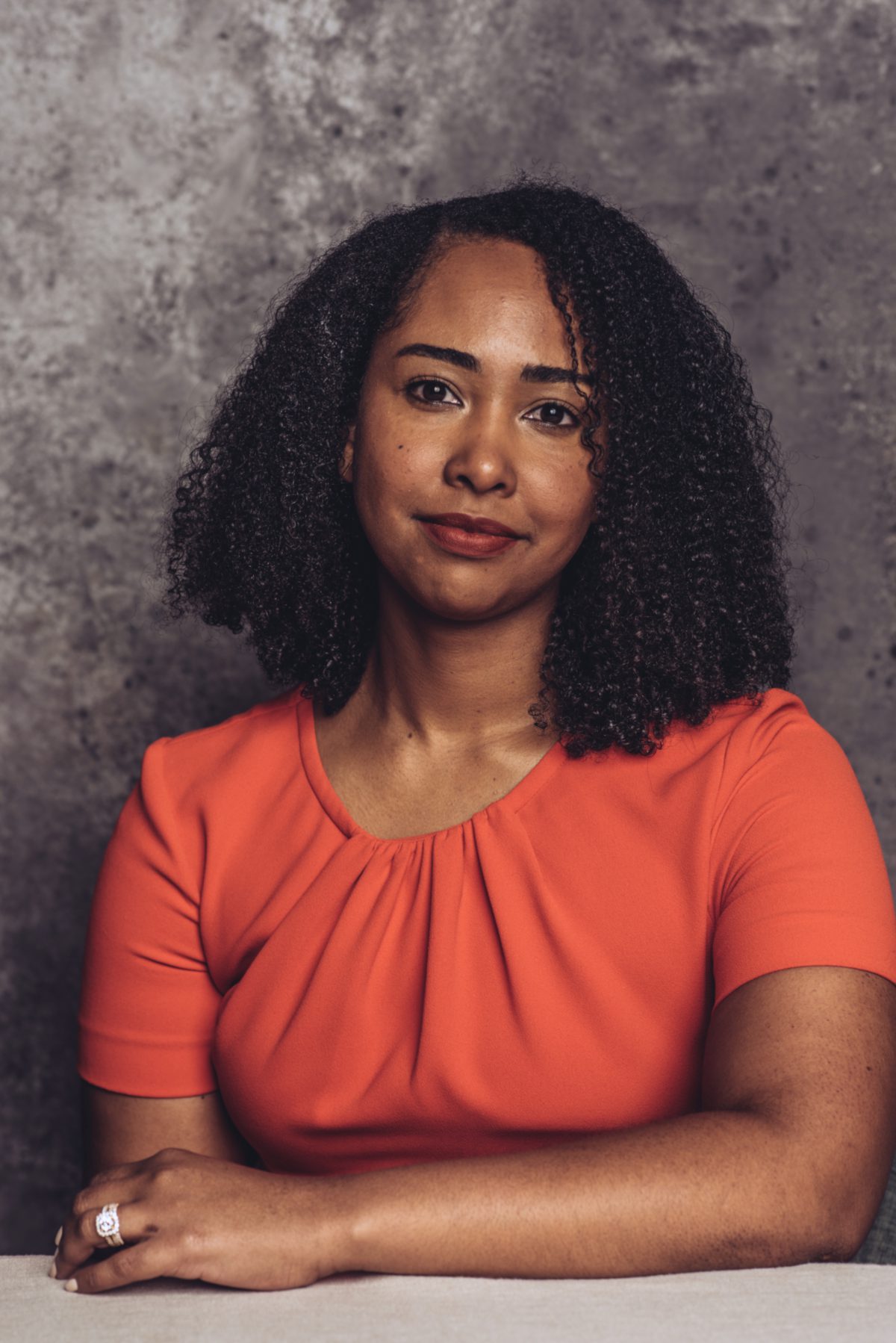
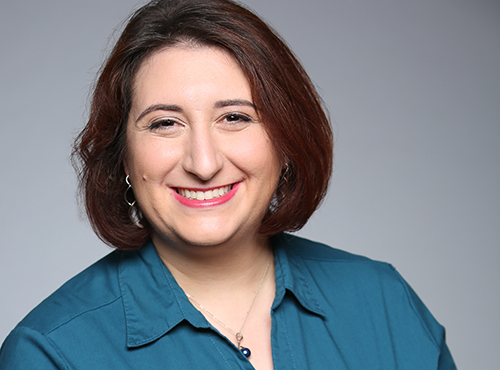
Medill alumna Clarke Humphrey (BSJ14) emphasizes the importance of a representative political space

As Deputy Digital Director for Joe Biden, Humphrey has successfully directed a mostly grassroots-based online fundraising program.

by Julia Richardson, BSJ23
Graphic by Carly Schulman

At 28 years old, Clarke Humphrey (Medill ’14) is leading the charge on ads, emails, texting and store fundraising for former Vice President Joe Biden’s presidential campaign. As Biden’s deputy digital director, Humphrey is running a historically successful fundraising program fueled by grassroots support.

After she graduated from Northwestern, Humphrey worked as a production assistant at the Democratic National Committee, where she contributed to the DNC online fundraising efforts for the midterm elections. In 2016, she joined then-Democratic presidential nominee Hillary Clinton’s campaign as digital director for North Carolina.

Humphrey went on to oversee the DNC’s ads program for the 2018 election cycle and worked for Bully Pulpit Interactive, a political ad agency in Washington, D.C., before becoming the DNC’s primary online director. In June, she landed her current position as deputy digital director, a job she describes as “reactive.”

“I would say throughout days, they don’t really look the same, so you are basically dealing with whatever is happening in the world at the time,” Humphrey said. “What I have envisioned my role to be is kind of just doing what I call blocking and tackling, so the folks on my team have the space to run effective programming.”

Leading up to the 2020 election, Humphrey focused on making sure there is enough money to run the Biden campaign’s ads. She also negotiates for resources that her team may need and organizes emails from significant signers, such as former President Barack Obama. She said the campaign has raised a large amount of money in the last few months, allowing for more TV ads and campaign efforts in battleground states.

Although working amid the uncertainties of a global pandemic has been difficult, Humphrey says one of the most rewarding parts of her job is grassroots fundraising.

“This campaign is primarily funded by people who are giving us donations of $200 or less, and that is the program that I oversee,” she said. “Just being in a position where literally millions of people are giving their hard-earned dollars to own a part of this campaign, and power the work that needs to be done. That, to me, is what makes this work really fulfilling.”

Lauren Williams, Humphrey’s friend and former colleague at the DNC, said Humphrey’s ability to build a strong fundraising team while maintaining good relationships is an “underrated skill,” and that she has a unique way of connecting with both supporters and people she works with.

“She takes her work incredibly seriously, but does not take herself too seriously,” Williams said. “All while coming across not as a very stuffy spokesperson, but she comes across as a real person with a bright personality and a sense of humor.”

Shelby Cole, former digital director for vice presidential nominee U.S. Sen. Kamala Harris (D-Calif.), said Humphrey has especially succeeded at running an ethical fundraising program with messages grounded in truth and reality.

“She, I think, really believes strongly in treating supporters like human beings and not ATM machines,” Cole said. “So, having watched her step into this role and run this program at this scale, as a Black woman to do it, too… I don’t think anyone has ever done what she’s done.”

Although Humphrey is what Cole describes as “the best in the industry,” she did not always plan to work in politics. She said she had envisioned herself as a magazine writer and only considered campaign work once graduation was approaching and it came time for her to apply for jobs.

However, Medill Dean Charles Whitaker, who taught Humphrey and worked with her in NU’s chapter of the National Association of Black Journalists, said her career path did not come as a surprise to him.

“She was always a really strong leader, someone who… I could tell was going to go into politics because she was good at assembling people and rallying them around a cause,” Whitaker said. “(Her position) is a great intersection of things she is good at and is passionate about.”

Humphrey said that her work has allowed her to learn a lot about herself and that she enjoys working in the political space. But she said she hopes to diversify the space going forward, as it still may be difficult for those without money or connections to become involved.

“That affects the work that we’re able to produce,” she said. “We are talking to so many different and diverse groups of people, and the people doing that work should reflect the basic folks that we are trying to talk to, and so one thing that I have learned about myself is that I’m very passionate about getting the space to a place where that actually is true.”
Published Nov. 2, 2020 in the Daily Northwestern

Categories
1970s Legacies

Patricia B. Sagon (BSJ71, MSJ72)

Patricia B. Sagon, a longtime journalist, world traveler and style connoisseur who embraced classical music and the arts as both a passion and a philanthropic cause, passed away Tuesday, November 3, 2020, from cancer at the age of 70. 

Patricia was a true Washingtonian, born and raised in a city that she called home for most of her life. She savored all of the capital’s museums and cultural touchstones, from her attendance as a teenager to the Beatles’ first American concert in Washington in 1964 to her involvement with the National Symphony Orchestra, where she served on the board for 25 years. 

A graduate of Northwestern University’s Medill School of Journalism, Patricia was an astute observer of the world around her with a natural curiosity. Patricia worked for years as a journalist in both print and television, including stints at the Wall Street Journal, WMAQ in Chicago and WPLG in Miami, during which she interviewed Pope John Paul II in Nassau, Bahamas. Her final position was also her most prominent, as the White House correspondent for the Westinghouse Broadcast Company in Washington in the 1980s, where she interviewed President Reagan and Princess Diana, among others. 

Patricia spent her entire life as an ardent consumer of the news. Daily, she would read the Washington Post, the New York Times and the Wall Street Journal. Late at night, she listened to the BBC and NPR. She championed good writing and speaking. One of her favorite T-shirts read, “I am silently correcting your grammar.” And she was. Just not always silently. For years, she mailed her close friends news clippings until recently when she finally gave in and mastered email and emojis. Patricia also brought her keen sense of style and fashion to her work, known as being the best-dressed journalist at many a Washington press stakeout. She always exuded grace, and she loved dressing up to go out on the town, bemoaning the lowering of dress codes and the absence of table cloths at many fine restaurants. There was truly nothing casual about Patricia. 

Patricia was an inveterate reader and lifelong learner. She enrolled in Sotheby’s classes and became knowledgeable about porcelains and other decorative arts. Her passion for the decorative arts culminated in using all her knowledge and taste in creating her ultimate home. After she retired from journalism, she committed herself headlong to supporting cultural, educational and health organizations in Washington. She was a master in organizing gala fund-raising events for The Octagon House, the Phillips Museum, Choral Arts Society of Washington and the National Symphony Orchestra, among others, and she created an endowment for the Washington Hospital Center’s new Heart and Vascular Institute. 

She also served on many boards, such as the National Cathedral School, WETA, the Phillips Museum, and the Choral Arts Society. But it was the National Symphony Orchestra that she considered her most prized endeavor. Her long involvement and support for the NSO allowed her to pursue her passions for both classical music and world travel, as she accompanied the orchestra on national and international tours and traveled most recently to Vienna with the Kennedy Center International Committee for the Arts. This spring, she made a special gift to NSO to help it through the pandemic. 

Gary Ginstling, NSO Executive Director, says, “Patricia shared her expertise and guidance generously as a Board member, traveled often with the Orchestra, and helped lead the NSO to the success it has found over the years. Above all else, she was a steadfast champion for our Orchestra and for classical music in our city.” 

In her travels, Patricia loved nothing better than lingering at a museum in London or Paris, spending hours studying each exhibit and reading every descriptive plaque. Her world travels took her to every corner of the globe, from penguin sightings in the Arctic to breakfasts with giraffes in Kenya, tenting in the desert of the United Arab Emirates and, earlier this past spring, braving the midnight subarctic temperatures to view the Northern Lights in Churchill, Manitoba.

Patricia was the single child of Philip Sagon, a lawyer and real estate developer in Washington, and Martha (Silverstein) Sagon, a social worker and philanthropist. Patricia was a loving and doting child to her mother who lived well into her late 90s. While having no children of her own, she was known as aunt Patricia to over dozens of children and grandchildren of her friends on whom she always generously doted. She will be missed by all those now adult children who loved having her as a part of their lives. She leaves a chasm in the lives of her many friends — who will not be getting their birthday or anniversary cards in the mail — and especially in the life of her constant companion of 35 years, Charles Miller. Patricia was a lifelong member of the Washington Hebrew congregation.

https://www.legacy.com/obituaries/washingtonpost/obituary.aspx?n=patricia-sagon&pid=197052130&fhid=10909

Categories
1950s Legacies

Robert Bradner (MSJ59)

Robert Bradner, beloved brother, father and grandfather, died peacefully on Monday, November 2, 2020. Born in Medford, Massachusetts, in 1932 to Louise and William M. Bradner, Bob was a man who remained faithful to the family, values and institutions in which he was raised.

A son of an Episcopal priest, Bob grew up in New England spending every summer at his family’s home in Rhode Island. Bob sang as a boy chorister at St. Martins Church in Providence and at St. Albans in Washington D.C., and his love for choral music remained with him always. Over more than 40 years as a parishioner at Christ Church in Winnetka, Illinois, Bob served on the vestry, led searches and oversaw building plans. He acted as church historian and proud bass in the choir. With the choir he traveled to York Minster where he sang with two of his grandchildren, a memory he cherished for the rest of his life.

Bob graduated from Holderness School in Plymouth, New Hampshire, and from Yale University in 1953 with a degree in English. He earned a master’s degree in Magazine Journalism from Northwestern University in 1959, placing first in his class and winning the prestigious Harrington Award in the magazine field.

After serving in the U.S. Army, Bob moved to Chicago to work for R.R. Donnelly & Sons. As a young North Sider, Bob jumped into the 42nd Ward Young Republicans where he served as president and, more importantly, where he met his future wife, Jeanne. Together they formed a bond over civic engagement that was a cornerstone of their 54-year marriage.

The Bradners moved to Winnetka in 1968 where Bob served on numerous public boards and acted as campaign manager for Brian Duff in his successful bids for state representative. Perhaps Bob’s biggest role in politics was as a supporter of his wife in all her political activities. Bob was his wife’s confidante, cheerleader, steadfast supporter and chief of staff. Their common belief in the importance of good government, participation and Robert’s Rules of Order informed everything they did.

Bob was equally dedicated in his volunteer work for Yale University. He served first as an alumni interviewer, later serving as a delegate to the AYA (Association of Yale Alumni) and then as chair of the AYA. In 2001 he received Yale’s highest volunteer honor, the Yale Medal, as recognition of his service.

Bob spent the majority of his career at The U.S. League of Savings Association, the trade publishing arm of the Savings and Loan Industry where he served as magazine editor and ultimately publisher. Later, Bob launched his own imprint: Conversation Press, focused on creating an outlet for public policy discussion and thought leadership.

Bob was predeceased by his wife Jeanne in 2012 and his brother William Murray Bradner, Jr. in 2008. He is survived by his adored sister, Helen Reid; three children Anne, Robert (Jerilyn), Lisa (James Burnham) and seven grandchildren: Brian and Connor Gates; Hunter and Joe Lohman; Emily Bradner; and James and Kate Burnham.

https://www.legacy.com/obituaries/chicagotribune/obituary.aspx?n=robert-bradner&pid=197061086

Categories
Features Home My Medill Story

Medill alumna Audrey Cheng leads software development school in Nairobi

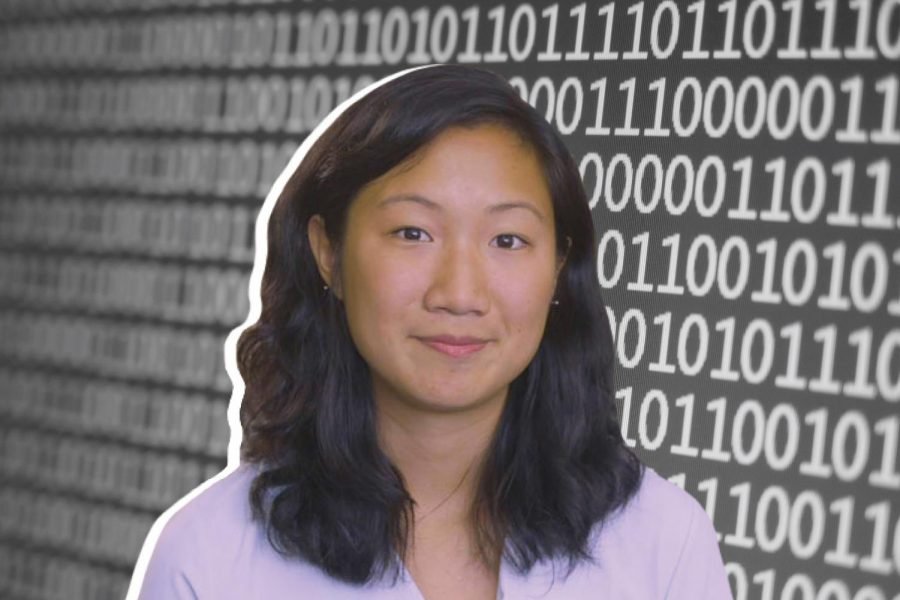
Audrey Cheng (MSJ15), co-founder and CEO of Moringa School in Nairobi, Kenya and Kigali, Rwanda. Moringa School provides software development and data science training.

by William Clark, BSJ24
Graphic by Emma Ruck

In the five years since Audrey Cheng (BSJ15) has graduated, she co-founded a software development and data science school with campuses in Kenya and Rwanda, worked with the World Bank to run a 20-week coding program in Pakistan and was featured on Forbes’ “30 Under 30” list for social entrepreneurs.

However, Cheng resists placing too much focus on her recognitions.

“It’s really validating to receive them, but I think ultimately what matters most is, ‘Are we solving a real problem? Are we doing it in a really meaningful and effective way?’” she said.

Cheng is working to solve what she called a “skills gap” in East Africa. The term describes the gap between technical skills African youth are acquiring in schools and the rapidly changing needs of the African economy as it increases automation.

The employment gap is another hurdle African youth face, Cheng said. As the population grows, the economy and jobs market must grow with it, and if it doesn’t, finding employment could become difficult and competitive.

During her sophomore year at Northwestern, Cheng started working remotely with the Savannah Fund, a capital fund that invests in African technology startups. She took the Spring Quarter of her junior year off to work with them in Nairobi, Kenya.

Cheng said she enjoyed the work but realized that as important as investment was, access to technological skills training for local youth was central to economic stimulation.

“You don’t get to build these amazing companies without that kind of skill,” Cheng said.

So, she co-founded a school.

In May 2014, Moringa School started its first class in Nairobi. Moringa offers students short, intensive programs that focus on building technical, career-oriented skills. These courses are split into two sections, a five-week introduction to programming and a 15-week program where students focus on a specific coding language of their choice. Throughout the program, students complete hands-on projects with mentors.

“(Moringa’s learning model) helped me interact with people,” Moringa graduate Ruth Mwangi said. “It also helps you learn to work in teams, because you’re usually put in pairs and have to work with your partner trying to solve problems.”

Other Moringa graduates said the school’s curriculum fosters a sense of community.

“We still have… communication groups in WhatsApp,” Reuben Gathii, a 2020 graduate, said. “We get to talk, we share ideas, we review each other’s code and we learn things from each other.”

But it’s not just the student community that allows for collaboration.

Moringa students receive technical mentors who help them find job opportunities after graduation, Billy Ayiera, another 2020 graduate, said.

Ninety-five percent of Moringa graduates have been hired at reputable companies, and graduates record a 350 percent average salary increase after graduation, according to the school’s website.

Moringa’s sense of community helps students succeed in the technology industry post-graduation, but it also addresses a problem Cheng said she noticed when she started working with Western organizations in Africa.

Too often, Western organizations seeking to “aid” African communities lack knowledge and respect for African independence, cultures and lifestyles, Cheng wrote in a 2014 Huffington Post op-ed. They draw on a stereotypical view of Africa that reduces the continent to disease, poverty, hunger and war, ignoring positivity, growth and vibrancy.

But Moringa is a company, not a charity, and Cheng said she believes this model incentivizes the school to better serve the needs of the community.

“At a nonprofit… the money is coming from donors, and so ultimately organizations are responsible and accountable to their donors, as opposed to… the person that they’re actually serving,” she said. “In a company, because the person who is paying is also the user, we have to be meeting their needs, and we are accountable to our students.”

Moringa also offers need-based flexible installment plans, as well as financial aid amid the COVID-19 pandemic.

Sasha Achieng, who leads community engagement at Moringa, said she frequently surveys the student community to ensure that their needs are met.

Moringa is currently using the online model to access more students across Africa during the pandemic, but in the future, they’re looking into geographic expansion, Cheng said.

“There’s basically space for everyone to grow,” Achieng said. “I mean, if I started (in 2018) as an intern and I’m currently leading in the company, it really speaks for itself, right?”

Published Nov. 11, 2020, in the Daily Northwestern

Categories
2000s Class Notes Featured Class Notes

Dani Friedland (MSJ10)

Dani Friedland is the new Director of Marketing Communications for The American Institute of Steel Construction.

She and her team are responsible for telling the story of America’s remarkable structural steel industry and the passionate people who work in the fields of architecture, engineering, steel fabrication, and construction. Although their expertise varies, these people have one thing in common: They will leave a legacy in steel.

AISC is a nonpartisan not-for-profit trade institute and industry association, founded in 1921, that strives to increase the market share of domestically fabricated structural steel.

Friedland joined AISC last year after nine years in B2B magazine publishing, where she held editorial, new media, and editorial tech roles. She briefly returned to Medill as an adjunct lecturer in 2018 and had an absolute blast working with the next generation of dedicated journalists.

Categories
1990s Class Notes

Leonard Greenberger (MSJ90)

Leonard joined Glassboro, N.J.-based AKCG Public Relations Partners as Senior Counselor and head of the firm’s new Washington, D.C. office.

Categories
2020s Class Notes Featured Class Notes Uncategorized

Colin Boyle (BSJ20, MSJ20)

After freelancing for Block Club Chicago while completing his Master’s Degree at Medill, Colin Boyle accepted a full-time position with the non-profit, subscription-based news outlet at the end of November 2020.

“I can’t wait to get back to serving my hometown through visual reporting and connecting with my neighbors across Chicago,” Boyle said. Boyle, a life-long Chicagoan, completed his undergraduate studies in journalism and Spanish at Medill and received an MSJ in video & broadcast journalism.

Throughout his time at Northwestern, Boyle served as photo editor for The Daily Northwestern for six consecutive quarters, co-writing a months-long investigative piece about educational and racial disparities in Evanston’s Fifth Ward. He has interned with The Chicago Sun-Times, Milwaukee Journal Sentinel, and most recently at IndyStar as a Pulliam Fellow. In 2019, Boyle completed his journalism residency at Infobae in Buenos Aires, Argentina, covering social unrest and daily news as a photojournalist.

Categories
2010s Class Notes Featured Class Notes

Gillian White (MSJ12)

Gillian B. White, a Managing Editor of The Atlantic, will join The Philadelphia Inquirer’s Board of Directors, Inquirer Publisher and CEO Elizabeth H. Hughes announced Tuesday. White will join The Inquirer Board effective immediately.

White started at The Atlantic in 2014, where she served in various roles including reporter, senior associate editor, senior editor, and deputy editor. As a current Managing Editor, White leads the Special Projects division, which pursues the publication’s most ambitious journalism across a range of platforms, including print, digital, audio, live events, and product. The Special Projects division also works across the company to identify opportunities to maximize financial support for The Atlantic’s journalism and to grow the publication’s audience and reach.

Prior to joining The Atlantic, White was an editor at the personal finance magazine Kiplinger and an analyst in the financial sector. White’s work has also appeared in publications such as The New York Times, Bloomberg, and MarketWatch.

“We are thrilled to welcome Gillian to The Philadelphia Inquirer Board of Directors. Among her many skills as a journalist, she understands the importance of reaching expanded audiences with news in ways they want it —  on their phones and through live experiences, for example,” said Josh Kopelman, Chairman of The Inquirer’s Board of Directors.

“The Inquirer was one of my daily sources of news growing up, and it helped inspire me to pursue a career in journalism. That is why I am particularly proud to join the board of one of the most important news organizations in a city I love,” White said.

White holds a BA in economics and political science from Columbia University and a Medill MSJ.

On the Board, White will join Hughes along with Josh Kopelman (Chairman), Lisa Kabnick (Vice Chair), Stephen J. Harmelin, S. Mitra Kalita, Keith Leaphart, Sunny Rao, Brian Tierney, Neil Vogel, and Richard Worley.

Categories
Home Medill News

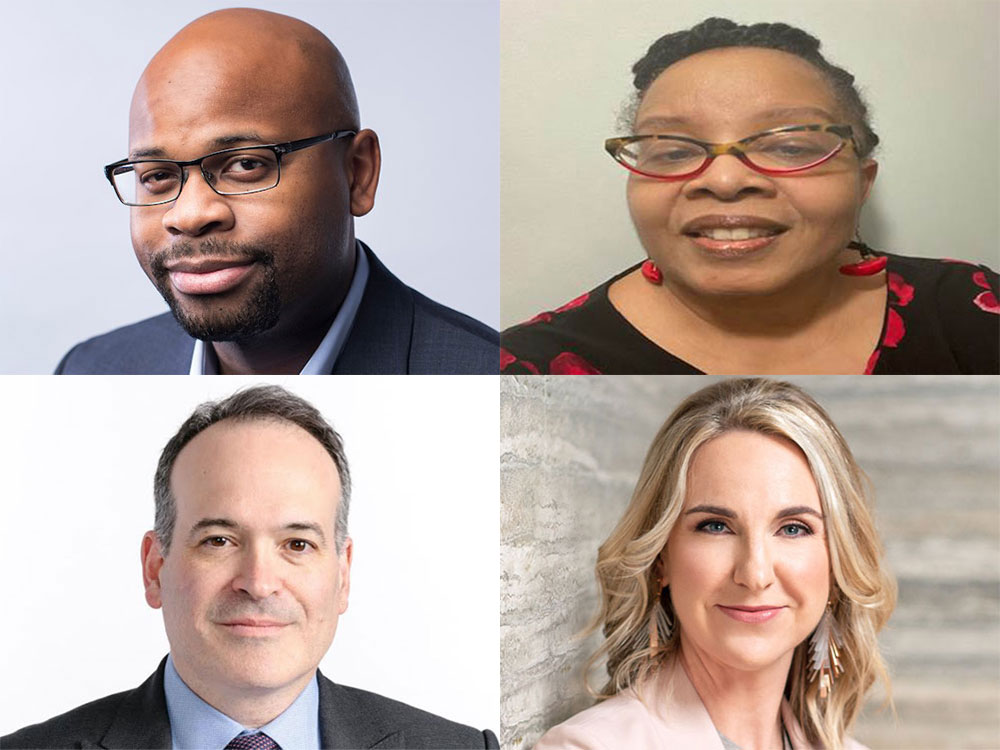
Medill Board of Advisers adds four new members

Four leaders in the fields of journalism and marketing have joined the Medill BOA 

“Our board members are a tremendous resource for the school and its leadership,” said Medill Dean Charles Whitaker. “I look forward to working with these new members in the years ahead and to the contributions they will make to Medill.”

New Board of Advisers members include:

bradley-akubuiro125x156.jpgBradley Akubuiro (BSJ11) is the chief spokesperson and senior director of global media relations for The Boeing Company, the largest aerospace manufacturer in the world. In this role, he is responsible for leading Boeing’s team of company spokespeople enterprise wide in their efforts to advance and protect the company’s interests around the globe. Akubuiro has provided leadership and counsel through the company’s response to COVID-19, the national conversation around race and several news making challenges and milestones in its effort to return the grounded 737 MAX to commercial service.

Prior to joining Boeing, Akubuiro served as director of corporate communications and public affairs for United Technologies Corporation (UTC) where he led the global corporate media relations and public affairs functions for the $77B Fortune 50 company. In an earlier role, he was deputy communications leader for the global military jet engines business at Pratt & Whitney, a unit of United Technologies.

marcia-davis125x156.jpgMarcia Davis is the supervising editor of race and identity at National Public Radio. She joined NPR in June 2020. A native of St. Louis, she spent more than 20 years as an editor and writer at The Washington Post.

At The Washington Post, Davis edited for Metro, Style, National and The Washington Post magazine. On the National Desk, she led coverage of the federal government, including breaking stories on mismanagement at the General Services Administration and stories on the U.S. Department of Veterans Affairs. She edited several columns, including the Federal Eye, In the Loop and the Federal Diary.

She also helped to lead the coverage of the fatal shooting of Michael Brown in St. Louis. That death was a significant point in the history of the Black Lives Matter Movement.
As the District of Columbia political editor, she supervised reporters who covered Mayor Adrian Fenty. And while editing for Style, she helped lead the award-winning series “Being a Black Man.”

Davis attended Medill in the 1980s before finishing her degree at Roosevelt University.

matt-murray125x156.jpgMatt Murray (BSJ87, MSJ88) is editor in chief of The Wall Street Journal and Dow Jones Newswires, responsible for all global newsgathering and editorial operations.

Murray previously served as executive editor since 2017, and had been deputy editor in chief since 2013. He joined Dow Jones & Company in 1994 as a reporter for the Pittsburgh bureau.

He is the author of “The Father and the Son” and collaborated on memoirs by former New York City fire commissioner Thomas Von Essen.

emily-ramshaw125x156.jpgEmily Ramshaw (BSJ03), is co-founder and CEO of The 19th, a nonprofit, nonpartisan newsroom reporting at the intersection of gender, politics and policy. Most recently, Ramshaw was the editor-in-chief of The Texas Tribune, a Peabody Award-winning, 10-year-old news startup that boasts the largest statehouse bureau in the nation, powers the pages of newspapers across Texas and the nation, and is considered the gold standard for sustainability in local news. She is also the youngest person ever to be named to the board of the Pulitzer Prize, where she is serving a nine-year term.
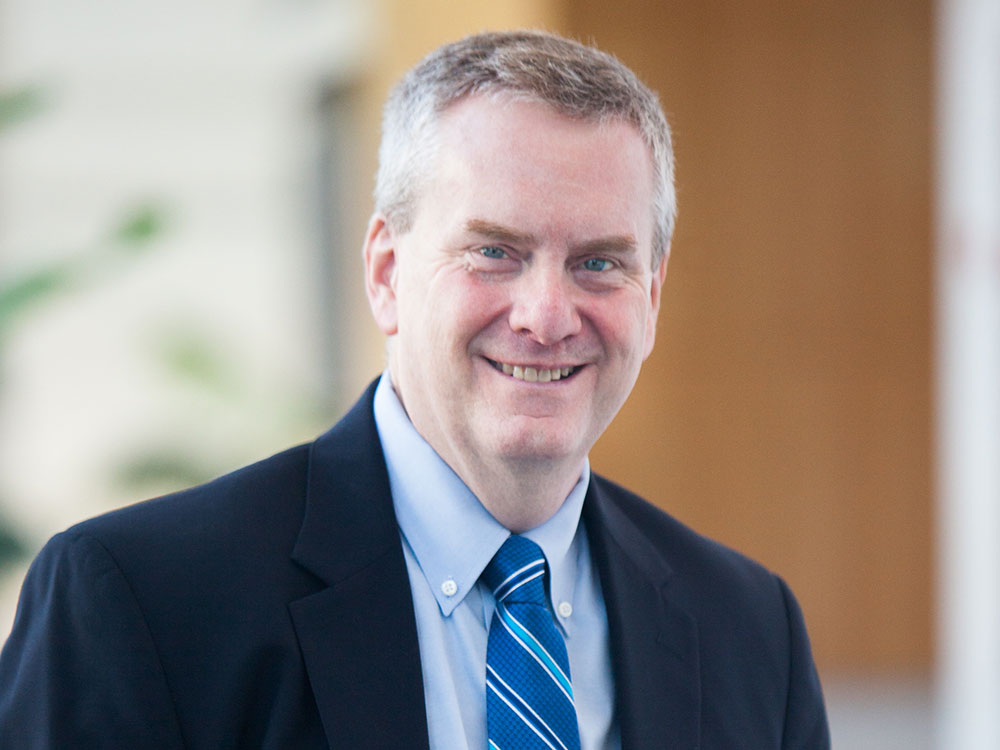
Before helping to found the Texas Tribune a decade ago, Ramshaw was an award-winning investigative reporter at The Dallas Morning News, where she broke national stories about sexual abuse inside Texas’ youth lock-ups, reported from inside a West Texas polygamist compound and uncovered “fight clubs” at state institutions for people with disabilities.

Categories
Giving Back Home

Medill announces John M. Mutz Chair in Local News

A newly endowed chair will study and support innovation in local news at Medill thanks to a gift from Medill alumnus John M. Mutz (BSJ57, MSJ58).

The John M. Mutz Chair in Local News will focus on local news sustainability. It will advance the aims of Medill’s Local News Initiative, an innovative research and development project aimed at providing greater understanding of how digital audiences engage with local news and finding new approaches to bolster local news business models.

“Local news is vital to our democracy and an empowered citizenry,” said Medill Dean Charles Whitaker. “As the media industry has transformed, local news outlets face unprecedented challenges. We are deeply grateful for John’s visionary generosity, which helped Medill launch the Local News Initiative and will now cement our place as a leader in addressing the crisis facing local news.”

Mutz’s $2 million gift to create the local news chair counts toward We Will. The Campaign for Northwestern, raising his total giving to Northwestern to over $2.3 million. The chair was supported in part by alumni Patrick G. ’59, ’09 H and Shirley W. Ryan ’61, ’19 H (’97, ’00 P) through the Ryan Family Chair Challenge, which matches gifts made by other Northwestern supporters to establish new endowed professorships, or chairs, across a wide range of disciplines. In 2017, Mutz’s commitment of $250,000 to the Local News Initiative was instrumental to the program’s launch. He also is a member of the Henry and Emma Rogers Society, which recognizes those who have included Northwestern in their estate plans.

Mutz earned undergraduate and graduate degrees from Medill in 1957 and 1958. He also participated in the Medill Cherubs program for high school journalism students in the summer of 1952. Mutz’s daughter, Diana, is a 1984 graduate of the School of Communication, and his son, Mark, graduated from the Weinberg College of Arts and Sciences in 1983. Two of Mutz’s grandchildren are also Northwestern alumni: Fletcher, who graduated from Weinberg College in 2017, and Maria, who graduated with a joint degree from the McCormick School of Engineering and Bienen School of Music in 2020.

Mutz is a business leader and politician who served as lieutenant governor of Indiana, Republican candidate for governor and president of Lilly Endowment Inc., one of the world’s largest private foundations. Mutz also served as president of PSI Energy, Indiana’s largest utility (now Duke Energy).

“My political experience has dramatically shown me how important reliable local news sources are to local governments and economies,” Mutz said. “Without it we may lose our democratic society and that would be a tragedy.”

Medill Senior Associate Dean and Professor Tim Franklin is the inaugural holder of the John M. Mutz Chair. Franklin is the leader of Medill’s Local News Initiative.

Franklin joined Medill’s faculty in 2017 after serving as president of The Poynter Institute, a leading international school for journalists and a media think tank. Before that, he had a distinguished career in journalism serving as top editor of three metropolitan newspapers, The Indianapolis Star, Orlando Sentinel and Baltimore Sun. His newsrooms won numerous national journalism awards, and The Sun was a Pulitzer Prize finalist during his tenure. Before joining Poynter in 2014, Franklin was a managing editor in the Washington bureau of Bloomberg News, helping oversee coverage of the White House, Congress, Supreme Court and many federal agencies. He also had a 17-year-career as a reporter and editor at the Chicago Tribune.

“I’m honored to serve as the inaugural Mutz Chair,” Franklin said. “John knows from first-hand experience during his political and business career about the importance of local news in our democracy. He’s passionate about the need for robust local news in our society, and he’s also passionate about Medill. With John’s generous gift, Medill will continue to be a national leader for years to come in developing partnerships, programs and new tools to help local news organizations and the communities they serve.”

Medill’s Local News Initiative began its work in 2018 in partnership with Medill’s Spiegel Research Center by analyzing 13 terabytes of reader and subscriber data from the Chicago Tribune, Indianapolis Star and San Francisco Chronicle to gain insights into online reader behavior. Medill now has conducted data-mining research in more than 20 local news markets. Next year, the school expects to roll out a new tool, the Medill Subscriber Engagement Index, which was awarded a Google Innovation Challenge grant. These findings, coupled with additional research and product development by Medill’s Knight Lab, are providing actionable guidance to media leaders about news and information consumers will pay for and how to grow reader revenue.

The funds raised through the “We Will” Campaign are helping realize the transformational vision set forth in Northwestern’s strategic plan and solidifying the University’s position among the world’s leading research universities. More information on We Will. The Campaign for Northwestern is available at the We Will website.