Categories
1960s Featured Legacies Legacies

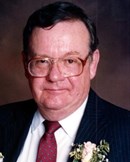
Carl Harris (MSJ63)

Carl Leigh Harris, husband of Ann Harris and father of Amy Leigh Tremante and Courtney Harris, passed away in Arlington, Texas Tuesday, June 2, 2020. Harris was born in Wichita Falls, Texas to, Leigh Mack Harris and Mary Jane Harris. He graduated from Baylor University with his B.A. in Journalism and received his Master’s from Medill. He began his career as a journalist with the Dallas Morning News and later became the director of Public Relations for Bell Helicopter where he worked for over 38 years. He was an avid reader and loved the arts, enjoying the Dallas Symphony and Kimbell Art Museum. He was called to help others, serving on the board of the Arlington Women’s Shelter, volunteering for the Arlington Life Shelter and teaching at the Arlington Reads program of the public library. He will be remembered for his bright eyes, joyful smile, and energetic spirit. Harris  is survived by his wife; daughters; brother, Terry Harris and his wife, Barbara Harris; sister, Holly Harris; sister-in-law, Pam Elam; son-in-law, Vincent Tremante; and grandsons, Evan, Aaron and Ian Tremante.

https://www.legacy.com/obituaries/name/carl-harris-obituary?pid=196316215

Categories
Books

The Herd

Andrea Bartz (BSJ08, MSJ08)

The name of the elite women-only coworking space stretches across the wall behind the check-in desk: THE HERD, the H-E-R always purple. In-the-know New Yorkers crawl over one another to apply for membership to this community that prides itself on mentorship and empowerment. Among the hopefuls is Katie Bradley, who’s just returned from the Midwest after a stint of book research blew up in her face. Luckily, Katie has an in, thanks to her sister, Hana, an original Herder and the best friend of Eleanor Walsh, the Herd’s charismatic founder.

Eleanor is a queen among the Herd’s sun-filled rooms, admired and feared even as she strives to be warm and approachable. But on the night of a glitzy Herd news conference, she vanishes. When the police suggest foul play, everyone is a suspect: Eleanor’s husband, other Herders, the men’s rights groups that loathe the Herd—even Eleanor’s closest friends. As Hana struggles to figure out what her friend was hiding and Katie chases the story of her life, the sisters must face the secrets they’re keeping from each other—and confront just how dangerous it can be when women’s perfect veneers start to crack.

Categories
1940s Featured Legacies Featured Legacies Home Legacies

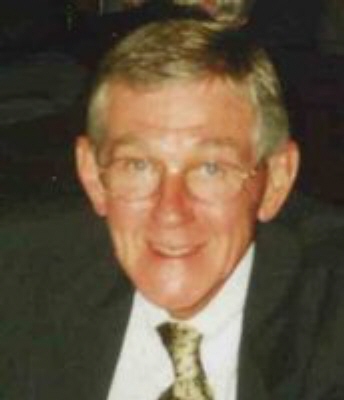
Murray Olderman (MSJ47)

Murray Olderman, an author and journalist who for more than six decades chronicled the sports world with his nationally syndicated cartoons in addition to writing features and columns, died on Wednesday in Rancho Mirage, Calif. He was 98.

Olderman was inducted into Medill’s Hall of Achievement in 2015. He traveled to Chicago to receive his award.

Olderman graduated as a journalism major from the University of Missouri. He received another bachelor’s degree from Stanford, where he studied French in a World War II Army program and was a member of Phi Beta Kappa. After the war, he obtained his master’s from Medill.

From Mickey Mantle to Joe Namath and Bear Bryant to Tiger Woods, Olderman  covered them all. For 35 years he was a syndicated columnist and cartoonist whose work was distributed by Newspaper Enterprise Association to 650 daily newspapers. After serving as executive editor of NEA, he retired from the syndicate but remains active as a writer and artist.

One of the leading national authorities on pro football, Olderman was a past president of the Football Writers Association of America and the founder of the Jim Thorpe Trophy (for the NFL’s most valuable player) and the Maurice Podoloff Trophy (for the NBA’s MVP). His football murals hang in the Pro Football Hall of Fame at Canton, Ohio. He was inducted into the National Sportscasters and Sportswriters Hall of Fame, the International Jewish Sports Hall of Fame, and is in the writers’ wing of the Pro Football Hall of Fame.

In 2013, he published a personal account of his time in the war. “A year apart…Letters from War-Torn Europe,” featured his letters to his wife written from Europe at the end of World War II with added insight into his experience abroad and his family.

He is survived by his daughter Lorraine and another daughter, Marcia Linn; a son, Mark; a sister, Diane Morton; five grandchildren; and three great-grandchildren. His wife, Nancy (Calhoun) Olderman, died in 2011.

https://www.nytimes.com/2020/06/11/sports/murray-olderman-dead.html

Photo: Taya Lynn Gray/The Desert Sun

Categories
Features Home

Spring Immigrant Connect Class Chronicles Pandemic’s Effect on Immigrant and Refugee Communities

The spring of 2020 brought fear, death and grief to hundreds of thousands across the globe. In the few months that the second year undergraduate journalism students taking Professor Doppelt’s spring 301 writing and reporting Immigrant Connect course were getting to know immigrants and refugees, more than 400,000 people died of the coronavirus pandemic. More than ¼ of them died in the U.S.

As the class was meeting for the first times in early April, they decided to focus our reporting on the pandemic’s effect on different immigrant and refugee communities.

What the group came to realize is that one of the potential effects of a global pandemic is to recognize that the experiences of migration and decisions about cross-national travel may pull the U.S., willingly or not, out of its exceptionalist posture and into a more cooperative arena.

Here are their stories on how the COVID-19 pandemic has affected different immigrant and refugee communities:

How have Chinese students handled what to do as the spread of COVID-19 limited their options to return to China? By Connie Deng 

Are people turning to traditional Chinese medicine during the coronavirus pandemic? By Lydia Rivers

How have Korean Americans prepared for COVID-19?  By Chloe Jeonghyun Heo

How have Indian grocery stores been impacted by COVID-19? By Rachel Baldauf

How have African refugees coped with COVID-19?  By Michael Fitzpatrick

How did COVID-19 affect Ramadan celebrations in the Arab American community around Dearborn, Michigan? By Bailey Pekar

Categories
Home My Medill Story

Malika Bilal (BSJ06) – Host/Producer, Al Jazeera English

By Arudi Masinjila  (BSJ21)

Malika Bilal had always known that she wanted to be a journalist. As a child, she would cut and paste pictures from magazines to make her own for the readership of her younger sister. “I don’t know if I knew what journalism was, but I definitely knew this field of writing and producing was something I wanted to do,” she recalls.

Born into a family with a documentarian father and an elder sister in broadcast, the field was not foreign to her. When the time came to apply to college, Northwestern University was her first-choice school. With its journalism program and proximity to home, it felt like a perfect fit, despite people’s reservations about it.

“At the time there weren’t a lot of places that offered a journalism undergrad program so people didn’t really understand how you could go to a school and get a journalism degree afterwards. It was like, ‘you’ll go to school for something and then you’ll go to graduate school for journalism.’ I already know I want to be a journalist. Why would I waste that time?” says Bilal. “I knew that I wanted to go there then it became everything I wanted it to be.”

While at Medill, Bilal was on the newspaper track, in line with her ambition to work for the Chicago Tribune or Chicago Sun Times. “I’m from Chicago so those are my two hometown papers and it just made sense,” she says. Though she was sure that she wanted to do newspaper, she also dabbled in other mediums as an intern at Northwestern News Network, the school’s student-run broadcast station, and reporter for the alumni magazine.

But when she graduated in 2006, her certainty turned into doubt in the face of an impending recession that made it difficult to find a job. “I’m freaking out because I’m thinking, I’ve just spent so much of my parents’ money on a journalism degree, I probably should’ve become a doctor because then there’s a guaranteed path to what’s next. And here I am, I can’t find a job,” Bilal recalls. She eventually found a paid radio broadcasting internship in Washington D.C. with Voice of America. Despite it not being exactly what her heart was set on initially, she credits it as one of the best decisions she’s ever made. It introduced her to the world of international news and was a steppingstone towards other opportunities in the field. “I loved [it] so much and then that led me to a job on a website, so doing online journalism, but also international news. It was like a domino effect and just spiraled from there,” she says.

Bilal’s next major career move came three years later, when a friend from her junior year study abroad program in Cairo encouraged her to apply for a job at the then relatively new Al Jazeera English station headquartered in Doha, Qatar. “I had been watching the headlines since they opened; I knew that I wanted to work there. That was my dream job so as soon as he messaged, I was like, ‘this is a sign,’” she says.

She applied and got the job and after many months of visa processing and paperwork, moved to Doha as an online producer. But the decision to move was not an easy one, as her initial excitement at pursuing her dream job was temporarily dampened by some of her peers’ skepticism about her relocation. “I got so much feedback from people like, ‘you’re gonna move across the world? How are you gonna get married? Are you gonna find someone over there? You’re really ruining your chances. This is the time you should be looking for a husband, this is not good for you.’ And that really scared me,” Bilal says. Deciding to not let this deter, she took up the opportunity.

She was promoted to assistant editor within a year, and later moved from web to broadcast as co-host and producer of “The Stream,” a daily panel-style program on current events. She considers this one of her career milestones, not just because she began hosting a show much earlier than she expected, but also because she was the first person at the channel to wear a hijab on screen. She had anticipated this would arouse some controversy, though it turned out not to.

“I was so nervous cause I’m thinking, ‘maybe one boss didn’t notice that someone gave me a job and they’re going to come in and say no we don’t want her on air’ or they’re going to get lots of feedback from people saying, ‘why do you have this girl in a scarf presenting the news? She’s biased or we don’t want her,’” she says. “But none of that ever happened so I think that was the biggest milestone. It’s hard to top that one.”

Aside from providing a platform for discussion, the show also offered a chance for citizens to hold people in power accountable. “My favorite stories are when we gave people a chance to speak to their elected representatives and have their say when they would be no other platform and no other way for them to do that,” she says.

After an eight and a half year run at “The Stream”, she switched mediums again and now hosts “The Take,” a news podcast, from Washington D.C. “I’ve now worked in every single medium that there is in journalism, which is great, I love it!” says Bilal.

Arudi Masinjila is a rising senior at Medill. She is passionate about using journalism for positive social change.

Categories
1950s 1950s Class Notes Legacies

Rochelle Distelheim (BSJ50)

Rochelle Distelheim, née Shulman, a west side of Chicago native and long-time Highland Park resident, died on June 1, 2020. She was 92. After graduating from Medill, Distelheim received her master’s degree in Creative Writing from the University of Illinois. She taught creative writing at Mundelein College.

Her short fiction received numerous awards and was published widely in literary journals and anthologies. Her debut novel, “Sadie in Love,” was published in 2018, when she was 90. Her second novel, “Jerusalem As a Second Language,” is due for publication in the fall. \

In lieu of flowers, contributions may be made to the Northern Illinois Food Bank and the Medill School of Journalism Scholarship Fund.

Distelheim was the beloved wife of the late Dr. Irving; loving mother of Ellen (Richard Tannenbaum) Distelheim, Laura Distelheim and Lisa (Jefferey Cornett) Barron; cherished grandmother of Nina, Ethan and Isabel Tannenbaum; dear sister of the late Maxine Payne, and adored aunt and great-aunt of many.

https://www.legacy.com/obituaries/chicagotribune/obituary.aspx?n=rochelle-distelheim&pid=196338405&fhid=2000

Categories
Books Uncategorized

If You Can’t Make Your Dream Come True, Then Build One

Anya Cheng (IMC08)

Opportunities are there for taking for those who are ready. However, when there is no opportunity in sight, instead of waiting, you must create opportunity on your own.

Waiting for someone to open a door for you is fine, but sometimes you have to kick the door open yourself.

How did a reporter from Taiwan become the Head of Product for eCommerce apps in Silicon Valley?

How did a young, immigrant business woman, who came from a humble home, lead engineers and data scientists at Facebook, eBay and Target?

Cheng’s story tells us that if she can do it, you can do, too, as long as you learn the how-to’s and are courageous enough to fight in unconventional ways.

Listen to your heart, be open-minded about new things, grab opportunities, and know when you don’t know something. We are living in a new era that no one has ever experienced. You aren’t happy with your career? You feel lost about the future? You’re not sure how to make decisions? Don’t be afraid! We are all pioneers now, and just like the pioneers of the old days, today’s pioneers hold the future in their hands. You can build your future from scratch! If you aren’t creative and don’t define the new rules yourself, how will you overcome these new challenges?

Currently based in Silicon Valley, Cheng uses her 15 years of experience in multiple countries and of finding her first job in the U.S. during the Great Recession to advise you on how to be a maverick and pioneer, and to turn crisis into opportunity. Sometimes when you think you have no opportunities, it’s actually that you are afraid and don’t know you have options. This book reveals how Cheng built her own opportunities and career. Reading it will inspire you and help you gain the confidence and power to push through difficult times!

Categories
1980s Legacies

David Anund Eskola (BSJ84)

David Anund Eskola passed away November 23, 2019 near his home in Washington DC after a heroic fight against kidney cancer. He was 57. He was born in Oak Hill, Ohio to Leslie and Betty Anund Eskola.

He was a 1980 graduate of Duluth East High School and a 1984 graduate of Medill.

Eskola started his career writing for a newspaper in Greenville, South Carolina, and went on to be a speech writer for officials in the Congressional and Executive branches of the Federal government as well as the American Medical Association.

He is survived by his mother Betty, brothers Eric, John and George, sister Karen Eskola Tordoff (Paul), niece Grace Tordoff and nephew Eli Tordoff, several cousins and numerous friends.

https://www.duluthnewstribune.com/obituaries/obits/4787579-David-Anund-Eskola

Categories
Home My Medill Story

Kelly Brockmeier (IMC19) How a start in news production led to an IMC degree

By Kelly Brockmeier (IMC19)

My mom used to tell me, “you can’t feed the neighborhood.” I was born a helper. I have a heart for the underdog, the disadvantaged, the lost—you get it. I’m still an idealist in many ways. I was also the kid that asked “why,” a LOT. I was destined to be a journalist, and boy was I good at it.

In my late 20s, I inadvertently landed an Executive Producer role. I never set out to be in management, it just happened. And not long after, I advanced to Assistant News Director. If you’ve worked in news you understand the job IS your life. The hours are grueling, and the pay can be really poor but that’s not why you sign up for this. It’s a calling.

In 2004, my news career suddenly ended. I didn’t know it was ending forever but it did.

Long story short, my boss told me it was either me or him. Brutal right? That’s the news business. My sudden unemployment opened a door to consider all my possibilities and I did just that. Somehow despite being fearful of doctors and needles and healthcare in general, I found myself smack dab in the middle of an academic medical center. My news skills translated nicely in the PR world and then eventually into a marketing leadership role. My secret sauce? The ability to identify and tell great stories across mediums, platforms and positions.

In 2015, I began interviewing for C-suite roles and most called for an advanced degree, something I did not have and honestly did not want. I was not keen on going back to school to check a box. I investigated lots of MBA programs and knew it was not the right fit. I even met with various universities. I had all but given up when one night I was served an online ad from Medill IMC. I knew about Northwestern as a journalist, it was a top program in the country. Additionally, my brother-in-law had played football at NU. He died suddenly in 2012 and there was an emotional tie to the university thanks to Coach Fitzgerald and his incredible staff and team who honored Leon Brockmeier by wearing his initials on their helmet that season. Without much thought as to how I would pay for this degree, I hastily applied as I sat on the couch one evening. I remember telling my husband what I had done, he sincerely thought I was joking.

As I waited for word on whether I had been accepted, I recalled the University President speaking at a pep rally during a bowl game in Jacksonville, Fla.,in January 2013. He talked about the academic prowess of NU. My brother-in-law often reminded us that his bachelor’s degree from NU was equivalent to his wife’s master’s degree from Florida State University. As we sat and heard Morty Schapiro list off stats on the student body we suddenly realized Leon hadn’t just been bragging—it was legitimate. I had hoped that maybe someday my son might go to NU to honor his uncle, but NEVER did I think it would be me. In 2013, I had zero aspirations to go back to school and even if I had, NU did not seem attainable.

Fast forward to 2016 and I get an acceptance letter. My NU journey began at age 45! To date it’s the largest single investment of time and money I have ever spent on myself and it was worth every penny. In the summer of 2019, I walked across the same football field my brother-in-law called home with his cardiac Cats. This time the heart attack was all mine as I donned the purple and officially graduated from NU with a master’s in Integrated Marketing Communications. It’s equivalent to a Ph.D. in some books! I still pinch myself, but the pictures prove it happened—I did it!

Immediately after my last class ended at NU in San Francisco, I took a job with Wounded Warrior Project as their national Director of PR & Social Media. My new chapter is well underway and I’m doing what I do best—telling meaningful stories and helping those most in need. The cool kids call that #winning, or so I’m told.

Learn more about my career journey by visiting www.kellybrockmeier.com.


Categories
Home Medill Research Uncategorized

Medill student internship research project findings in the Chicago Tribune

Employers, don’t cancel those internships — make them remote

By Melissa Santoyo (BSJ23)

When COVID-19 first hit the U.S., I was extremely fortunate that the pandemic only ruined the spring quarter of my freshman year and my summer study-abroad plans. But as a low-income, first-generation college student, I scrambled to find something to fill the few months of vacation. Because whereas my wealthier peers could probably afford to spend a summer unemployed, I am constantly racing against the clock, asking myself, “How long do I have until graduation and what can I do to make sure I’ll be hired after that?”

I am the daughter of Cuban immigrants, and I inherited their tenacity. My hunger to succeed is the product of growing up in a country that seems to constantly work against people like me. So, I scoured the internet for summer internships to keep busy, to hone marketable skills, to move forward.

After 30 emails to editors at various publications, I scored an unpaid internship — and an outside scholarship.

I know that, as a student at a private institution, I am incredibly privileged to be able to take up such a summer task. But still, I urge employers to keep internship opportunities available for students, even if they must be remote. Otherwise, as in my case, many of us wouldn’t have access to professional connections.

As a student collaborator on the well-regarded internship program at Northwestern University, I see firsthand the value of on-the-job experience. But earlier this year, when our journalism residency director Karen Springen and I started a small journalism research project called The Intern Factor, we quickly realized hands-on experience outside of the classroom is even more important than we thought. Of the 1,156 alumni of the Medill School of Journalism who responded to a short online survey, 683 gave the top rating (“very valuable”) to their internships’ ability to help them find meaningful full-time employment.

That makes it even more upsetting that many internships have been rescinded, albeit for a good reason (a global pandemic). A poll by the National Association of Colleges and Employers found that 22% of employers were revoking their offers to interns this summer, and a Yello survey found that more than a third of students said their offer was canceled.

“I can’t fathom what those students are going through now,” says Gustavo Paredes, who works in client services at a technology company and interned for a Buenos Aires newspaper in 2019 through a Northwestern University program covered by his financial aid. “My experience played a pivotal role in where I am.”

Without a college internship at what is now called Florida Today, “I wouldn’t have landed that first job,” says Northwestern alum Scot O’Hara, who currently works in financial-industry communications. “It made all the difference in the world.”

We understand why companies are canceling their summer internships. After all, hiring managers are often unsure of their own jobs and of their ability to give students a good “remote” experience.

Still, the rescinders quickly earned some bad social media PR while the keepers (including PepsiCo and Apple) earned high praise and gratitude. Paredes’ employer decided to still hire a dozen summer 2020 interns, who are working remotely. “People like myself said, ‘These internships play a pivotal role for these young adults,’” he says.

Internships are a two-way street. Young people get training, experience, connections and, in the case of journalists, published “clips.” But their older bosses arguably get even more from the deal. Their students bring fresh ideas and tech savvy, teaching their on-the-job mentors how to, say, build a line graph on a Google spreadsheet. Interns offer important insight into Gen Z tools such as TikTok and Snapchat. They also help fill in when regular employees are on vacation or family leave. And, perhaps most important, they bring the energy of youth. “I find the enthusiasm that the interns bring is even a bigger payoff,” says O’Hara. “It just revitalizes the whole department.”

Sure, coronavirus-caused remote internships aren’t ideal. It’s nicer for students to sit in person next to experienced reporters and editors, overhearing how they conduct interviews, bumping into them in the elevator and grabbing coffee with them. But the cancelers forgot that most young people are extraordinarily flexible and willing to Slack and Zoom.

My own remote internship has so far been an incredible learning experience. Not only is my work being published, but I’m learning about the intricacies of journalism outside of the Medill classroom. From hunting down PR contacts to working a 9-to-5 schedule, there are things J-school can’t teach.

“If the college curriculum gave me the basics and the tool kit, the internships gave me the opportunity to really build,” said Gina Mangieri, a TV reporter in Hawaii who holds bachelor’s and master’s degrees from Medill and completed six internships. “If you can’t actually go do it and practice it, you’re not going to learn everything you need to learn in the classroom.”

During internships, students typically discover their interests, their strengths and their passions. They learn to pitch their own ideas and to be proactive. They also learn about how corporations do (or don’t) follow their mission statements. They learn to feel more confident in their abilities. And during this short period of professional experience, they figure out what they like, and don’t like, doing.

Students often realize they love — or hate — a city like New York. They see that they like researching better than writing — or vice versa. They learn to multitask, get up early, keep to a tight schedule and talk to people. Dream jobs change. They get a clear idea of what they’d like to do after graduation. They see what matters to bosses: attention to detail, dedication, hard work.

Despite bright spots like Report for America (similar to Teach for America), there need to be more places where young people can make connections and also figure out who they are and who they want to be.

After all, soon the Class of COVID-19 and its immediate successors will be the bosses.

Melissa Santoyo is a rising sophomore at Northwestern University’s Medill School of Journalism, Media, Integrated Marketing Communications.