Categories
Home My Medill Story

A New Horizon: How Bethany Crystal (BSJ09) is Building With AI

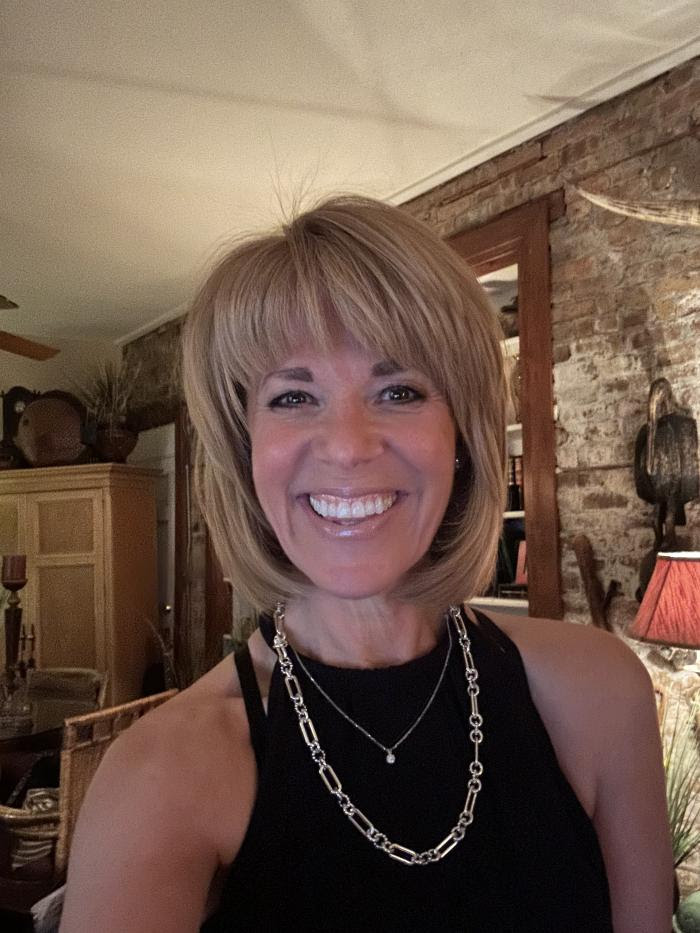
On a crowded afternoon at a local museum, Bethany Crystal takes out her phone, snaps a photo of an exhibit and feeds it to ChatGPT with a quick prompt: “explain this like I’m a five-year-old.” After receiving the generated response, she reads it to her two kids. A few months later, she uses the idea to create her first app, MuseKat.

Crystal, who graduated from Medill in 2009, is working for herself as a startup founder and entrepreneur since creating MuseKat in January of 2025. She designed the app without prior coding experience, relying instead on the curiosity and questioning skills she developed at Medill. Through a back-and-forth with ChatGPT and the AI-assisted code editor Cursor, the final product was a fully functional web app starring Miko, a museum meerkat that tells age-tailored audio stories to kids based on photos of exhibits.

“To me, that was this major unlock moment where I finally felt like software and building software was something that could actually be available,” said Crystal. “Even to someone like me who has a journalism degree.”  

After receiving many questions about her process of creation, she dug deep into her design-thinking framework — the same approach she credits with helping her, as a non-engineer, build her first app. Today, she teaches the framework to a plethora of companies and individuals through her startup, Build First.

“I’m calling it [Build First] an AI learning lab,” Crystal said. “One of the things I’ve learned this year is that the best way to learn about AI is to start by using it yourself.”

In a world where AI can be met with skepticism, Crystal sees it instead as a tool to empower users. Whether parents need a list of dinners they can make with ingredients in their fridge, or a marketing team needs ways to turn their content into short TikTok videos, she said her goal is to help people become users of software rather than passive consumers.

This is all done through what she calls “AI Power Hours.” In 60 minutes, companies and individuals follow Crystal’s lead in designing, building and launching AI-powered tools. Participants start with a problem that resonates with them, and by the end of the session, they have a tangible, working product.

A typical session starts by guiding the user through a question flow where the problem statement is refined, the outcome is described and any extra details are provided. Then the user can choose whether they want the app to be a website, a text-only chatbot, or an app, with all options generating everything needed to build a basic platform in 60 minutes.

However, Crystal has realized there is more to engaging with AI than typing prompts. Through her Build First sessions and usage of AI, she acquired multiple dimensions she considers when creating. The first, she describes as leaning on apps or experiences that are leading toward creation over consumption — much like her second app, Scribblins, which turns kids’ drawings into printable stickers. The second, she says, is powering experiences that give high agency by promoting collaborative experiences with the real world instead of staying digital.

“When you think of AI as an additional partner,” Crystal said, “it feels like a healthier behavior than some other, more negative consequences.”

She says the idea that anyone can build something without needing to code has completely changed the way she thinks about software. Looking ahead, Crystal believes AI will open the door for others to become builders. 

And although Build First currently operates as a service-based teaching platform, her long-term goal is to turn it into “a startup studio for the AI-native entrepreneur.” The vision comes from her experience of building two apps and her curiosity about what it could look like for other possible founders and builders in the AI age.

“I finally feel like anyone can contribute to the architecture and skyline of what the internet looks like, and to me, that’s the biggest unlock that AI is introducing.”


Categories
Home Medill Research

Local news consumers shifting to new platforms and sources, Medill survey shows

Smart phones are now the dominant device used to consume local news; more people get local news from content creators than legacy news outlets; people want humans – not just AI – delivering their news; and local news is widely used, but very few pay for it.

Those are among the headline findings in a comprehensive new survey of 1,101 residents in the 14-county Chicago area commissioned by the Medill Local News Initiative at Northwestern University. The survey was conducted this spring for Medill by NORC at the University of Chicago. It was led by Medill’s Associate Dean of Research Stephanie Edgerly and Tim Franklin, the John M. Mutz Chair in Local News.

The survey captures the changing ways in which people’s news behaviors are evolving, as they abandon traditional media and find new ways to get information. The report’s findings provide both dire warning signals for the news industry, as well as reasons for optimism.

Here are some of the major survey results:

  • Two-thirds of those surveyed frequently consume local news on their smartphones, far surpassing television and other platforms.
  • There’s a massive generational divide in where people turn for local news. More than 70% of young adults frequently use smartphones, while about the same number of older adults turn to TV.
  • Nearly one-third of respondents consume local news daily from content creators, more than those who turn to traditional news sources like newspapers, radio and digital-only sites. This shows that individuals can compete with major news organizations to develop followings.
  • Most respondents are not comfortable with news produced mostly by artificial intelligence, but they’re more accepting of AI in a support role with journalists.
  • The vast majority of those polled, 85%, consume local news at least once a week, illustrating widespread demand for local information. And a majority, 51%, said they trust local news, far more than those who trust national news.
  • Still, few respondents, 15%, said they pay for local news, an alarmingly small number at a time when news organizations are suffering declining ad revenue and public media is losing federal funding. Despite that, nearly two-thirds believe local news is on sound financial footing, even amid mounting newspaper closures and journalist job losses.

“This survey highlights the transformational changes afoot, ones that are remaking both where people are going for news and how journalists are producing it,” Edgerly said.

Franklin, the founding director of the Medill Local News Initiative, said, “This survey gives news leaders valuable insights to help them tailor their audience and business strategies to the new news diets of consumers.”

The Medill Local News Initiative, a research and development program launched more than seven years ago, commissioned this survey with financial support from the Chicago-based Robert R. McCormick Foundation. This was the second consecutive year Medill has conducted a Chicago-area news consumer poll in the hope it would arm news leaders, philanthropists, policymakers and scholars with the information they need to make informed decisions about the local news ecosystem.

View the full survey report here: https://localnewsinitiative.northwestern.edu/posts/2025/09/10/chicago-area-news-consumption-survey-2025/index.html

Categories
Home More News

Medill launches new concentration in sports marketing

Recently Medill announced a new concentration in sports marketing that students in its Integrated Marketing Communications Full-Time program can join starting Fall 2026.

The concentration will give students deep knowledge on topics such as sports and athlete branding, e-sports and gaming, sponsorship strategy, digital fan engagement and brand communications. Guided by expert faculty and real-world projects, students will acquire the skills to design campaigns and drive engagement across arenas, online platforms and global markets.

“In sports marketing, every moment is more than a play—it’s an opportunity to spark emotion, build loyalty, and create lasting connections between fans, brands, and the games they love,” said Vijay Viswanathan, Medill associate dean of IMC. “If you aspire to launch a career where sports, brands, fans and media intersect, Medill is where your journey begins.”

As part of Medill’s signature experiential learning programs, choosing the sports marketing concentration will give students the opportunity to gain hands-on experience while working on projects for top sports marketing brands.

Categories
1970s Featured Legacies Home Home Legacies

Andy Wolfson (MSJ78)

Andy Wolfson, an investigative reporter for more than 44 years at The Courier Journal and its former afternoon affiliate, the Louisville Times, has died. He was 70.

Wolfson died Sept. 17 at his home in Louisville where he had been managing several health problems, including recovery from a stroke last year, according to his wife, Mary Welp.

His death was reported Thursday by The Courier Journal, where he served as an award-winning journalist covering the justice system and other subjects for most of his career.

His work helped The Courier Journal win two Pulitzer Prizes, one in 1989 for team coverage of the fiery Carroll County church bus crash that killed 27 children and adults. In 2020, he was among reporters who won a Pulitzer for the coverage of a flurry of last-minute, highly-controversial pardons by outgoing Gov. Matt Bevin.

But Wolfson, who retired in 2024, was best known for his work covering legal affairs and the justice system, including reporting on the case of a man on Kentucky’s death row, Gregory Wilson, who was freed after Wolfson’s work outlined Wilson’s poor legal representation and other flaws in the prosecution, The Courier Journal reported.

He was known and largely respected by lawyers and judges throughout the commonwealth and beyond.

“I think he’s the best investigative reporter in Kentucky,” Scott Cox, a prominent Louisville defense lawyer and former prosecutor said when Wolson retired last year, according to The Courier Journal. Cox called Wolfson “fearless” and said he “doesn’t back down.”

Brusque and at times abrasive, Wolfson was known for asking pointed questions and striking alarm in subjects through an unexpected call or visit.

Among stories Wolfson liked to tell on himself: Some years ago, he visited Jefferson District Court to protest a traffic ticket he believed was unfair.

The judge was calling cases alphabetically and he waited several hours till most of the other cases were called, the courtroom cleared, and the judge, recognizing Wolfson, asked what he was doing in the courtroom.

Wolfson explained he came to protest a ticket. The judge, in relief, said he thought Wolfson was there to investigate his handling of traffic court and promptly addressed his complaint.

A native of Connecticut, Wolfson graduated from Colorado College and Northwestern University, where he received a master’s degree from the Medill School of Journalism in 1977.

He came to work in Louisville in 1980, first at the Louisville Times, before moving in 1983 to the morning statewide newspaper, The Courier Journal.

He is survived by his wife, Mary Welp; a son, Wylie Wolfson; his sister, Ellen Wolfson; her husband, Neil Grosberg, and a niece and nephew.

https://kentuckylantern.com/2025/09/18/andy-wolfson-journalist-whose-beat-was-justice-dies-in-louisville/

Categories
Books

The Plan of Chicago: A City in Stories

Barry Pearce (BSJ1991)

The Plan of Chicago: A City in Stories has an unusual structure – 9 linked stories set in 9 Chicago neighborhoods – and unusual range.

The characters – half men, half women – include immigrants from Poland, Mexico, Ireland, and Somalia. They work as housepainters, taxi drivers, sketch artists, and scam artists – exploited by or exploiting others to make it in an unforgiving city. Chicago features heavily in their plans, though the plan of Chicago – shaped by divisions of race, class, gender, violence – often forces them apart. Despite that division, incongruous lives intersect here in unexpected ways. An Irish tradesman in a changing neighborhood struggles with the complications of befriending an African American coworker. His boss’s self-absorbed wife, a Polish immigrant, learns to count people in new ways working for the Census. A Romanian boy who helps his father fake accidents tests the limits of filial loyalty, and the claims adjustor investigating his case confronts dark baggage when his partner works with rape victims.

Through these varied characters – Black and White, straight and gay, wealthy and working-class – Pearce captures the breadth and depth of the city that sits dead center in America and better than any other, reveal its promise and flaws.

Categories
1980s Class Notes Featured Class Notes

Lisa Parker (BSJ88)

Lisa Parker is the new director of the Center for Journalism Integrity & Excellence at DePaul University, where she teaches Advanced Reporting. Lisa joined DePaul after a career as a consumer investigative reporter, most recently for 27 years at NBC Chicago. In a major serendipity, this year Lisa taught alongside her favorite former Medill instructor Rick Brown!