Categories
Books

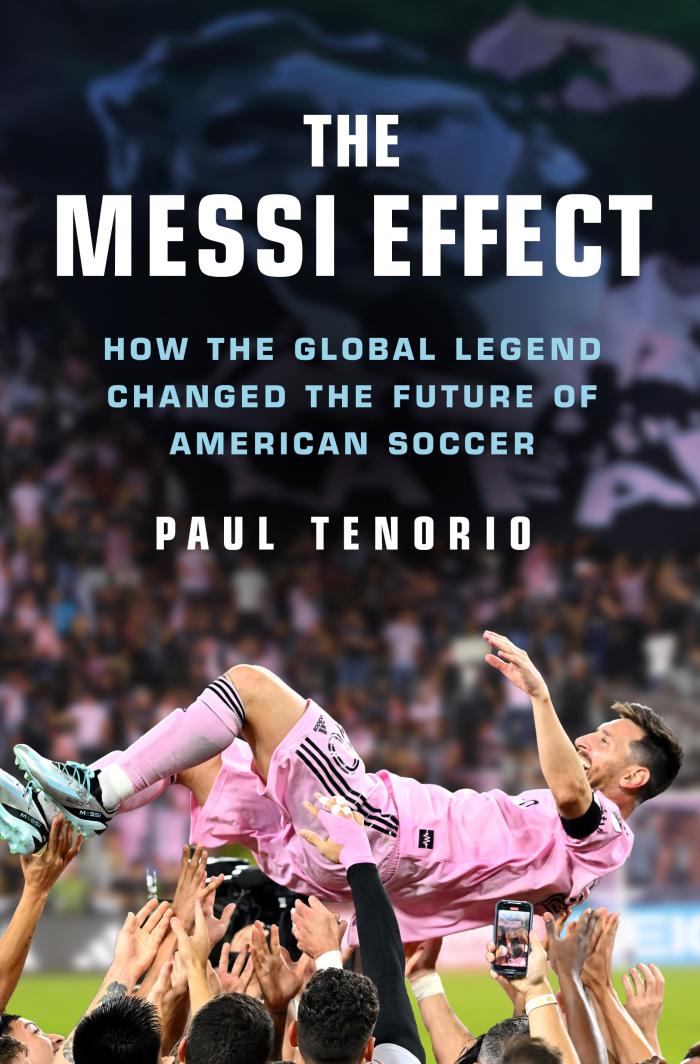
The Messi Effect

Paul Tenorio (BSJ07)

In The Messi Effect, Paul Tenorio, national soccer writer for The Athletic, who has spent more than a decade providing insight into the power and politics of the sport, draws on numerous high-ranking sources inside Inter Miami, American soccer, and overseas to bring readers behind the scenes and chronicle the last act of Lionel Messi.

The Messi Effect takes you inside the locker room as Messi’s arrival turned Miami into a global phenomenon, and into the Major League Soccer boardroom as league owners debated how to leverage Messi’s arrival to shape the future of the league and sport in America. From his cinematic debut goal to his first trophy with Miami and across two more transformative seasons, Messi’s impact was immediate and enormous. His pink No. 10 shirt became the world’s best-selling jersey, MLS stadiums sold out in city after city, and Inter Miami’s valuation soared past $1 billion.

This is a book about the business of sport and how a player can be both athlete and economic engine. It’s an inside look at how the business of MLS evolved historically and in real time after the legend’s arrival. And it’s the story of the aftereffects of Messi’s greatness for future generations.

Categories
Books

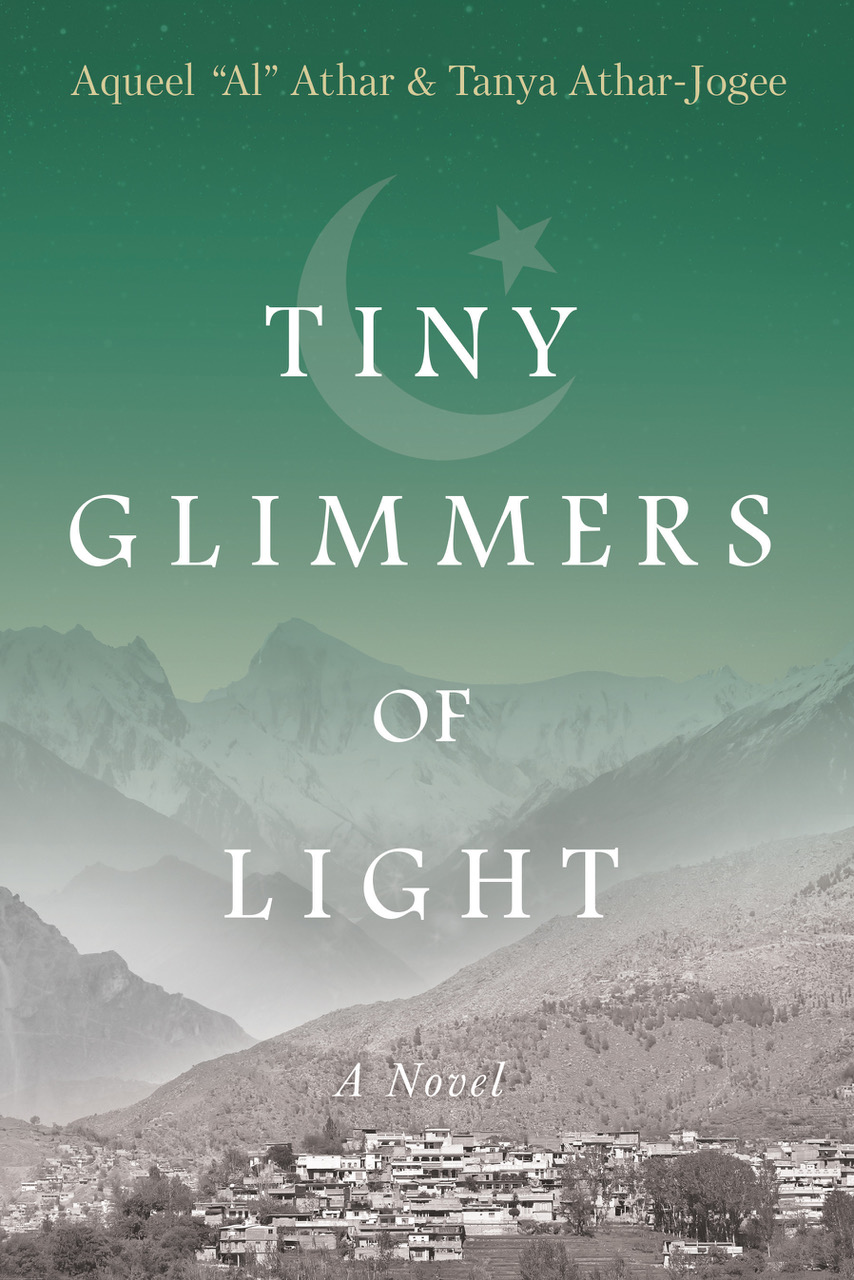
Tiny Glimmers of Light – a Novel

Tanya Athar-Jogee (IMC03)

2014: When a knock comes in the half-light before dawn in a slum in Karachi, Pakistan, the lives of 19-year-old Goha and his family are about to change forever.

Lured by a tantalizing opportunity to work for a secret organization that will release his family from poverty, Goha leaves his parents behind for the tribal areas up North. But as he learns about the organization’s core beliefs and activities, his excitement starts to fade. His courage is tested when he is coerced into a physical relationship with his superior and faces other agonizing moral dilemmas and violence—all while falling in love with the local imam’s stunning ex-wife.

Rife with suspense and rich characters, Tiny Glimmers of Light explores themes of identity, sexuality, religious nuances, class hierarchies, extremism, and institutional corruption. It will keep readers on edge as Goha faces threats to his survival and his family’s fortune.

Hundreds of Urdu words bring a tumultuous Pakistan alive on the pages while immersing readers fully into the country’s diverse geography, languages, and gender roles. The story will appeal to anyone craving a deeper understanding of the temptations faced by a hard-working, lower-class family to improve the circumstances of their lives.

Categories
Books

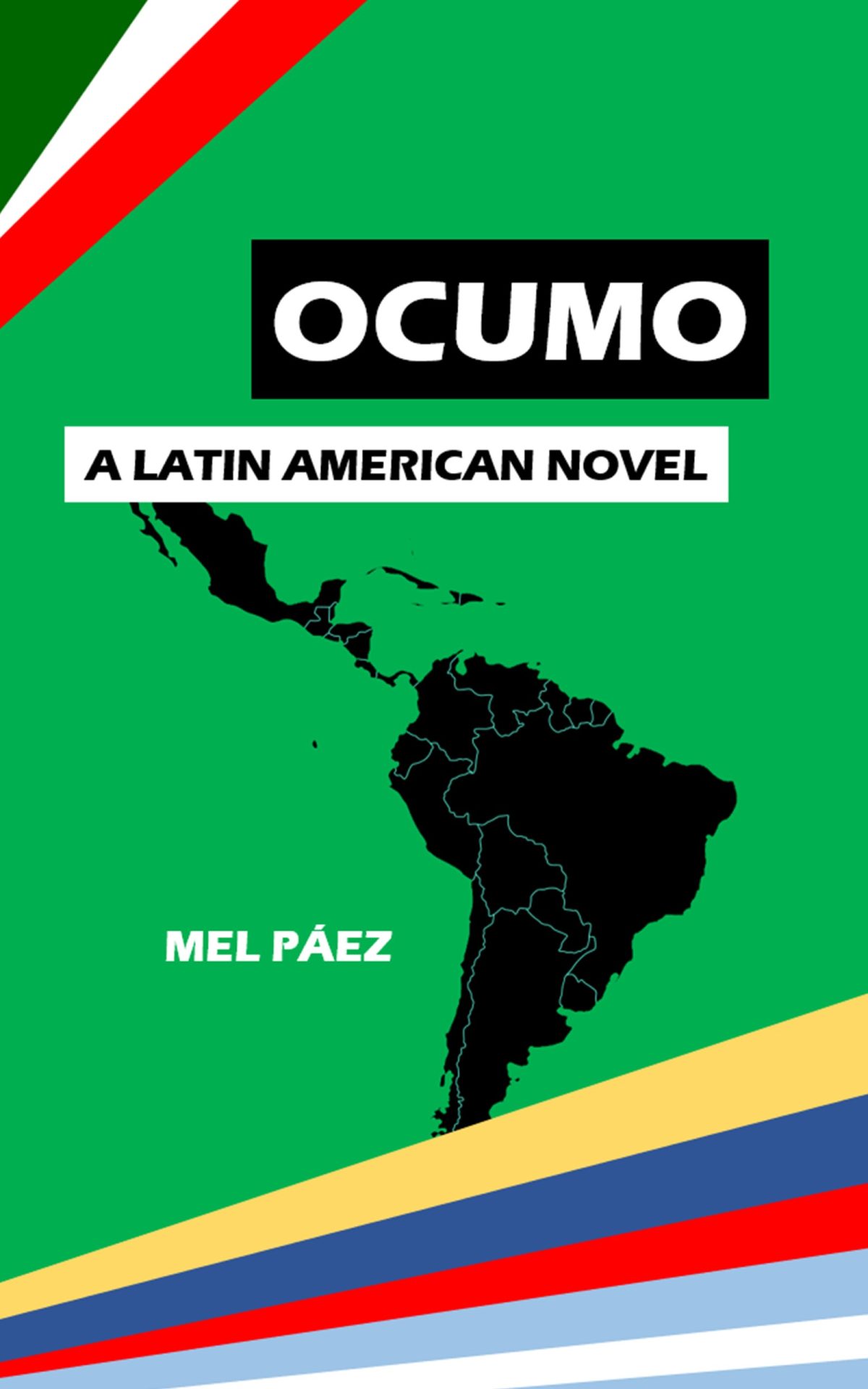
Ocumo: A Latin American Novel

Tulio Capriles (MSJ99)

Pen name: Mel Páez

Güelcom to Ocumo, a city like any other on this side of the New World, somewhere, anywhere (everywhere!?) between Rio Grande and Tierra del Fuego.

This town has more liquor stores than pharmacies. Corruption, power outages and hyperinflation don’t surprise anyone anymore. But Mayor Sonia Elena Ortega says things will change if she wins the coming presidential election. People have heard the same promises before. Still, they’ll dare hope for a savior once more. She can’t be much worse than the incumbent presidente, a snob nicknamed EMLU who runs the country as his own private hacienda.

Sonia Elena’s campaign is a longshot and for a chance to win she needs all the support she can get, from the media, the C.I.A. and, of course, a miracle.

“Ocumo: A Latin American Novel” gives a take on the region’s complexities through the perspectives of a diverse group of characters, including a Black live-in maid, an anti-establishment entrepreneur and an ex-prostitute turned news reporter.

Categories
Books

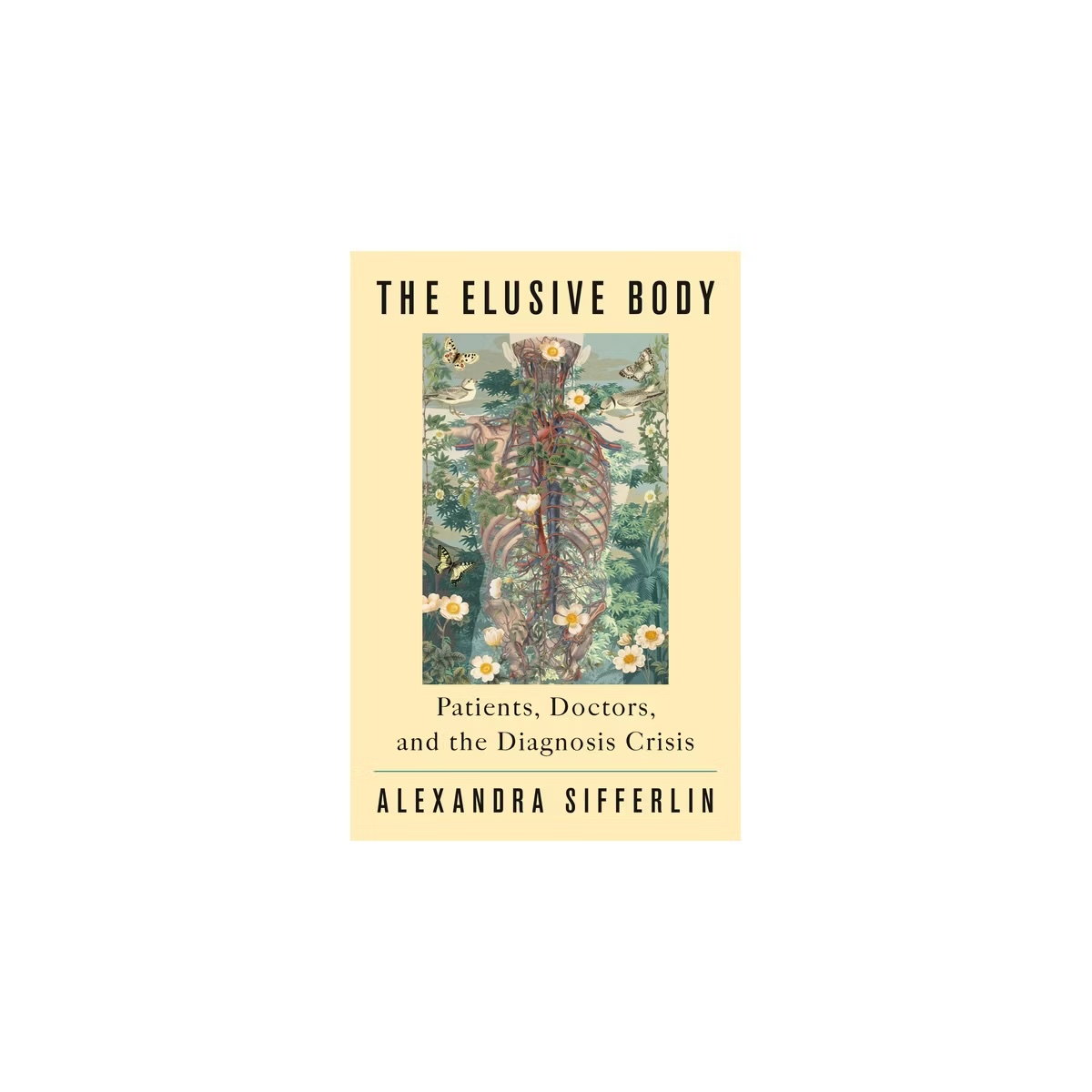
The Elusive Body: Patients, Doctors and the Diagnosis Crisis

Alexandra Sifferlin (BSJ12)

Millions of Americans live with conditions that elude diagnosis, often navigating a healthcare system that fails to recognize or effectively address their suffering. The New York Times journalist and Medill alum Alexandra Sifferlin has spent years investigating the diagnosis crisis in America—what it means to live without an accurate diagnosis and how both medical and patient communities are working to improve the diagnostic process. Weaving the profound, maddening, and uplifting stories of patients seeking answers to unexplainable symptoms, the doctors trying to help them, and the latest research on diagnosis, The Elusive Body illuminates the diagnostic journey, revealing why diagnoses matter and how they have the power to transform lives, the medical system, and even society, one case at a time.

Categories
1960s Class Notes Featured Class Notes

Jerry Kirshenbaum (BSJ60)

Kirshenbaum published “Miami Road: A Son’s Memoir,” a book about his family’s life on Chicago’s once heavily Jewish West Side and in his hometown of Benton Harbor, Michigan, and touching on his Northwestern years. Kirshenbaum was a feature writer and columnist at the Minneapolis Tribune, staff writer at Time and for 30 years a writer and editor at Sports Illustrated. He is an inductee in Medill’s Hall of Achievement. In 2022, he came out of retirement to write a 50th anniversary reminiscence for Sports Illustrated of his experiences covering the 1972 Munich Olympics at which Mark Spitz’s heroics were eclipsed by a terrorist attack that shocked the world. Michael Korda, author and former editor-in-chief of Simon & Schuster, says of Miami Road: “I enjoyed this book enormously. Written with a remarkable combination of frankness and love. A family story well told.”

Categories
1980s Featured Legacies Legacies

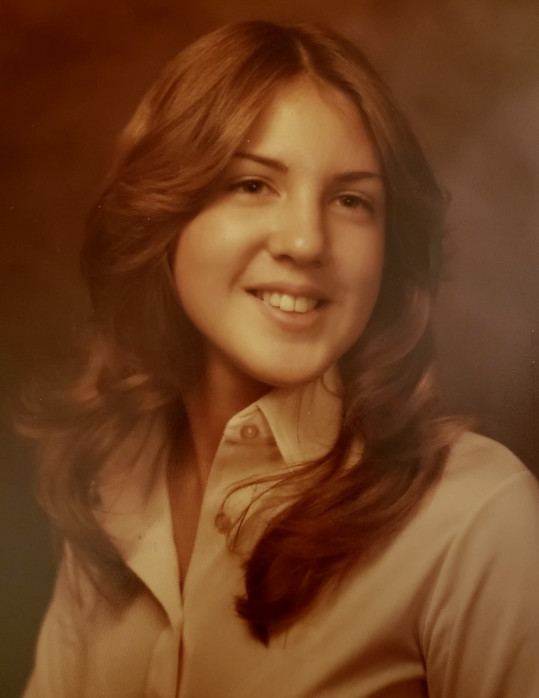
Laura Penny (MSJ83)

Laura Penny, born in Bellport, New York, passed away peacefully surrounded by her family and friends on February 7, 2026.

She is survived by her husband Andrew Anker, children Court, Jonathan, and Katherine Anker, grandchildren David and Winston Riscen, and the Penny, Anker and Vitelli families. She was the devoted daughter of Dorothy Penny and the late George Penny. She was the dear sister of Diane Vitelli. She leaves behind her beloved cat, Sky. Laura was a devoted mother, passionate animal lover, and loyal friend with a deeply caring heart and quick wit. She was a natural at making connections, always taking time to learn about others’ lives and interests.

Laura was the managing editor of the Bellport Clipper newspaper in high school and The Eagle at the American University. She earned a Master’s in journalism from Medill in 1983, and was featured in Chicago Magazine in a story about city news print reporters.

Laura worked as a communications manager at Aspen Systems in Rockville, Maryland, for more than 10 years, where she managed a staff of 50 writers, editors, artists and proofers who published documents for a variety of government agencies. She also was an independent editor for 15 years before retirement for the National Academy of Sciences.

As a journalist and a medical journal editor for four decades, her commitment to her subjects and her attention to detail was unrivaled.

She was a generous mentor to many fighting LeiomyoSarcoma, even as she fought it herself. She was the Great White Shark that was always swimming ahead and fighting for what she wanted. She founded the Ladybugs LMS support group in the Washington, D.C. area, and served as a moderator for another online support group with over 5,500 members. Laura fought LMS for 21.5 years, all while maintaining her roles as mother, wife, editor, ally, and friend.

Donations in Laura’s memory can be made to LeiomyoSarcoma Support & Direct Research Foundation https://lmsdr.org/donate and Kent Animal Shelter https://donatenow.networkforgood.org/kentanimalshelter/mdonate

Content taken from published obituary:

https://www.raynordandrea.com/obituary/Laura-Penny

Categories
2000s Featured Legacies Featured Legacies Home Legacies Uncategorized

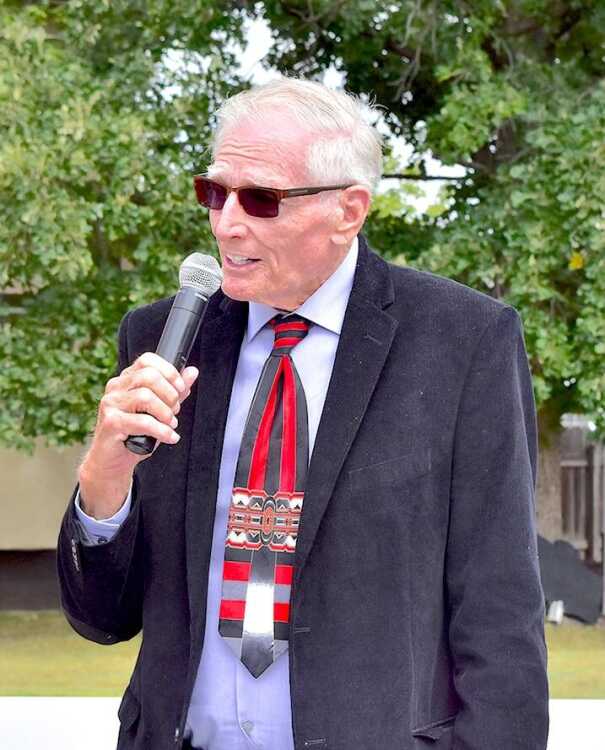
Joseph Angotti – Former Medill Broadcast Faculty

Revered former faculty member Joe Angotti died on January 25, 2026.

He was 87.

In 2005, Joe and his wife, Karen, co-founded Rainbow Riders Therapeutic Riding Center in Monmouth, IL where the Angotti’s had moved into a house built on Karen’s father’s former 12 acres, Bowman Meadow Farm.

Rainbow Riders is a nonprofit organization dedicated to providing safe, professional, and affordable therapeutic horseback riding and un-mounted horsemanship opportunities that contribute positively to the physical, cognitive, emotional, and social well-being of children and adults with special needs in the community. Our team of experienced instructors and volunteers work together to create a supportive environment for our riders, where they can build confidence, develop new skills, and make meaningful connections with the horses and other riders.

When Joe and Karen were raising their three sons Drew, Mark and Joe, in various cities over the years, the Angottis made sure they spent time in Monmouth during the summers, where they also learned to ride horses.

Here’s what Joe’s Medill community members had to say about one of the school’s most beloved faculty member:

Sheinelle Jones (BSJ00)

My name is Sheinelle Jones, and I have the honor of saying that I was one of the countless students Professor Angotti touched with his wisdom and kindness. In his class at Northwestern University, he made us all better writers and storytellers. I’m *constantly*…. to this day, sharing my favorite memories from his class. In fact, just last week, I was sharing a memory from his class with my colleagues from The TODAY Show. In that moment, there were two of his former students on set – as I was with another Medill alum- Joe Fryer. We both cherished our days in Professor Angotti’s class. To his family, I’m sending you so much love. Please know he touched so many of us in countless ways – and his legacy lives on in all of us. ❤️

Joe Fryer (BSJ00)

“Professor Angotti joined Medill just in time for my senior year, and I’m so grateful our Northwestern lives overlapped. It’s not just because he literally brought Tom Brokaw into our classroom. It’s not just because he coordinated having our class featured prominently in a Dateline special. It’s because he cared deeply about all of us, freely sharing his volumes of broadcasting experience and knowledge, before giving us that final push out of the university nest as we embarked on our careers. His leadership and mentorship helped make the Northwestern News Network the envy of schools nationwide. Thank you, Professor Angotti, for making our profession better – one student, one class at a time.”

Mike Lowe (BSJ01, MSJ02)

Joe Angotti, who mined his legendary career at NBC News for countless lessons to teach young journalists, perhaps saved his most practical lecture for last. Every year, he would gather the seniors in the Louis Hall TV studio, and he would draw a graph of intersecting lines on the board. One pointing up. The other, pointing down. Underneath the graph he would write the words “suffer fools gladly.” His point was that in our careers, we would encounter people who “may not be the brightest bulbs.” He told us not to dim our lights to their levels. To respect others, and not engage in needless arguments. Then pointed to the graph: “you’ll see those same people when you’re on your way up, and they are on their way down.” Aside from the solid career advice, he taught me invaluable lessons about reporting including the memorable nugget “report long, write short.” I was fortunate to call him a professor, mentor, and friend.

Ben Harper (BSJ03, MSJ03) and  Dani Carlson Harper (BSJ06)

Professor Angotti was the definition of gravitas. His lived experience was legendary—you wanted to be around him to absorb whatever advice or anecdotes he might share. And being on the receiving end of his slightly bemused grin when he’d come to clear up something we *might* have done at NNN to cause a phone call from the administration felt like you’d earned a bit of his respect, too.

Larry Stuelpnagel – Medill Clinical Associate Professor Emeritus

Joe was an enthusiastic advisor. He strongly supported what was then called the broadcast program. Yes, he had a twinkle in his eye and heart.

Jack Doppelt – Medill Professor Emeritus

I recall vividly a heart wrenching exchange Joe and I had in 2002 when he was leading the Medill global program in Paris. It brought us closer together than I had anticipated, and provided a connection we savored after that. A few years later, Joe left Medill and moved to Monmouth, about 200 miles west of Chicago. We kept in touch a bit, enough for me to discover that he and his wife Karen opened Rainbow Riders, a therapeutic and recreational riding program for children with special needs. Back then, I promised to visit them on their farm. Here’s a story I kept as my bookmark to remind me to visit. I never got there. My loss.

David Nelson – Medill Professor Emeritus

For the record: I bought and brought the bocce balls [Yes, there was bocce playing happening at Medill. 

Joe bought and brought the sausages and chianti. Early games were on the 3rd floor outside of the then faculty lounge in what we used to call MTC. [Now MFC]. I do not remember Joe losing a single game. Perhaps the chianti worked.

Loren Ghiglione – Professor Emeritus and former Dean

I loved the few bocce games I played. My Italian name didn’t help me. I lost every time. I’m sorry to hear about Joe’s death. What he did after he left Medill tells you a lot about the quality of man. Helping kids, nothing better.

Categories
1970s Featured Legacies Featured Legacies Home Home Legacies

Bruce Dold (BSJ77, MSJ78)

by Robert Channick, Chicago Tribune

Photo: E. Jason Wambsgans/Chicago Tribune

Bruce Dold, who rose from suburban reporter to editor and publisher during his prodigious four-decade career at the Chicago Tribune, had only a handful of bylines after his name took its place on the masthead.

But the Pulitzer Prize-winning journalist left an indelible mark on the newspaper and the city, tackling the issues of the day, promoting civil discourse and influencing public policy.

From clearheaded editorials that found common ground to the groundbreaking endorsement of Chicago’s own Barack Obama for president, Dold led the Tribune into the new millennium with a reverence for the newspaper’s storied history, and an open mind for the future.

Dold even took on the ultimate challenge of balancing journalism and business interests in a dual editor-publisher role as the newspaper industry grappled with declining revenue and downsizing in the digital media age.

“He was really the consummate newspaperman,” said Tribune writer Rick Kogan, a colleague, friend and regular golfing buddy of Dold’s. “His passion for the Chicago Tribune was immense and unwavering.”

A longtime resident of west suburban La Grange Park, Dold, 70, died Wednesday after a four-year battle with esophageal cancer.

A New Jersey native, Dold came to the Midwest in 1973 to attend Northwestern University, where he decided to pursue a career in journalism. Inspired by the powerful reporting that broke the Watergate scandal and brought down President Richard Nixon’s administration, he earned his bachelor’s and master’s degrees at the Medill School of Journalism.

In 1978, he joined the Chicago Tribune, starting as a reporter for the Suburban Trib before moving on to the flagship newspaper, where he primarily covered politics. Among his reporting highlights, Dold cited the power struggle of the Council Wars, as they were dubbed, following Chicago Mayor Harold Washington’s 1987 death.

“While the city was in grief, all the aldermen were scurrying around and trying to pick a puppet who was going to run the city for them,” Dold told the Tribune upon his elevation to editor in 2016. “It was the richest story I’ve ever seen in my life, and I got an opportunity to do that because I worked for the Chicago Tribune.”

Former Northwestern University spokesperson Alan Cubbage, who attended Medill’s Master of Science in Journalism program with Dold in 1978, competed against his former classmate in the suburbs while working for the Daily Herald.

He remembers the younger Dold as a friendly fellow graduate and a dogged reporter.

“One of the reasons I left journalism is I kept getting scooped by Bruce Dold,” Cubbage said. “He was just a really good reporter who had lots of sources and covered the beat really well, and it was always kind of tough to go up against him.”

Dold joined the Tribune’s editorial board in 1990, starting on a path that would lead him to the top of the Tribune’s masthead, and of his profession. In 1994, Dold earned the Pulitzer Prize for editorial writing for his series on the murder of a 3-year-old boy by his abusive mother and the failure of the Illinois child-welfare system to save him.

Chicago Tribune editorial writer Bruce Dold is congratulated April 12, 1994, after winning the Pulitzer Prize for editorial writing on the subject of violence against children. (Chris Walker/Chicago Tribune)
The editorials, which accompanied a yearlong newsroom exploration of the circumstances behind Joseph Wallace’s death – itself a Pulitzer finalist for public service journalism – catalyzed new legislation in Illinois to protect children from abuse and neglect.

At the time of his award, Dold praised the newsroom in a Tribune story celebrating the honor.

“Sometimes the best stuff we do on the editorial board is kind of piggybacking on the best reporting that goes on in the newsroom,” Dold said. “This was a case of it.”

Dold was named editorial page editor in 2000, guiding the Tribune’s opinion page. One of his first moves was replacing his vacant slot on the editorial board. He didn’t have to look far, hiring John McCormick, a friend, neighbor and carpooling buddy who previously served as Midwest bureau chief of Newsweek.

“Fortunately for me, his worldwide search only extended four blocks from his house,” said McCormick, who became deputy editor in 2001, and eventually succeeded Dold as editorial page editor.

In 2001, Dold wrote a piece explaining what he believed to be the editorial board’s mission.

“We should have a sense of civic commitment, but shouldn’t assume government has all the answers,” Dold wrote. “I believe the newspaper is one of the few places that has the independence and the influence to demand that government be accountable to the governed.”

Those guiding principles served the Tribune editorial board under Dold’s leadership, winning a Pulitzer in 2003 and earning finalist honors in 2009, 2010 and 2011.

In 2008, Dold steered the editorial board into uncharted political waters when it endorsed Chicago’s own Barack Obama for president, marking the first time in the Tribune’s history that the paper — a founding voice of the Republican party — backed a Democrat for the highest office in the land.

The editorial board also endorsed Obama for reelection in 2012, praising Obama’s “steadiness” in leading the country out of an inherited recession, among other accomplishments.

“It was a big deal for the paper,” McCormick said. “Bruce was the prime mover on those endorsements, both of them, that’s unarguable to anybody who was in the room.”

For years, that room was a stately, wood-paneled office on the fourth floor of the century-old neo-Gothic Tribune Tower, where politicians, titans of industry, celebrities and other leaders would gather around a large hexagonal table with rich leather inlays while seeking the support of the editorial board, under the watchful eye of an Abraham Lincoln portrait.

Everyone from Donald Trump and Bill Clinton to Obama sat in green leather chairs at that table with Dold during their respective presidential campaigns.

“Bruce made a lot of politicians squirm in that room, always in a quiet voice,” McCormick said.

Making your case before Dold for a favorable Tribune editorial inside Chicago’s erstwhile cathedral of journalism could, at times, be an intimidating endeavor, according to Guy Chipparoni, a politically connected public relations consultant.

“He would sit there with John McCormick to his left, their hands folded on the table, and he’d just say, ‘you may begin,’” Chipparoni said. “He was as warm as he could be, but it was like meeting with the College of Cardinals.”

Beyond the editorial boardroom, Dold faced a greater challenge after Tribune Co. emerged from Chapter 11 bankruptcy and spun off its publishing division in 2014, ushering in a series of ownership changes.

In February 2016, two weeks after technology entrepreneur Michael Ferro became the largest shareholder and chairman of Tribune Publishing, Dold was elevated to editor-in-chief at the Chicago Tribune.

Dold soon added the dual role of publisher, leading the Chicago Tribune through tumultuous times as it navigated the rapidly changing media landscape. That meant downsizing editorial operations amid declining revenues at the newspaper.

McCormick, who became editorial board editor when Dold was promoted, described his longtime friend and colleague as being caught in a “pincerlike assault” between the business and journalism sides of the industry.

These were not the best of times for the Tribune or Dold, but it was a responsibility he bore while nurturing young journalists, staying engaged and keeping a steady hand at the helm.

Chicago Tribune Editor-Publisher Bruce Dold on his final day in the Tribune offices, April 30, 2020. (Peter Tsai/Chicago Tribune)
His 42-year career at the Chicago Tribune came to an abrupt end in February 2020 amid a local management shakeup at the newspaper after investment firm Alden Global Capital bought out Ferro’s stake and became the controlling shareholder of Tribune Publishing.

Emblematic of the changes, the Chicago Tribune exited Tribune Tower in 2018, and the Michigan Avenue landmark has since been converted into million-dollar condos. The editorial board subsequently moved with an itinerant newsroom to Prudential Plaza, the now-demolished Freedom Center printing plant and its current home on West Jackson Boulevard in the Loop.

Chris Jones, the Tribune’s longtime theater critic, who added the role of editorial page editor in 2021, oversees a downsized four-member editorial board, which holds court in more modest accommodations.

“Bruce had a commanding presence, and it’s not easy to live up to,” Jones said. “I think he also had a kind of a moral sensibility, and that is also something that we try to live up to on a daily basis.”

While in hospice care in recent weeks at his daughter Kristen Christman’s house in Winnetka, Dold received an outpouring of letters from former colleagues, friends and people he knew over his long career.

Among the letters was a handwritten note from former President Obama.

“It was the most beautiful letter I’ve ever read,” said Megan Dold, his daughter. “He said, ‘you were always a terrific journalist (even when you were after me), and that kind of integrity is sorely missed these days.’ It was amazing. He took a lot of comfort in that.”

Kogan said Dold never lost the “insatiable curiosity” that made him a good newspaperman. But more than anything, Kogan said, he was simply a good man.

Outside the newsroom, Dold, a former college DJ, loved music of all kinds, from Billie Holiday to the Grateful Dead, with an expansive record collection numbering in the thousands. But the New Jersey native had a special place in his heart for Bruce Springsteen, bringing his wife and daughters to see the Boss perform at Wrigley Field in August 2023.

“He loved Bruce Springsteen,” Megan Dold said. ”He was very proud to be from New Jersey. It was Bruce and Bruce. He knew every lyric.”

Dold was also an avid golfer and devoted family man, who took his wife, Eileen, and two young daughters to the White House when he won the Pulitzer Prize, and somehow managed to make it home for dinner most nights, despite the demands of his career, Megan Dold said.

In recent years, he reveled in being a grandfather, spending his last weeks surrounded by family.

“His grandkids were his pride and joy, and even while he was in bed, they’d come and play checkers with him,” said Kristen Christman.

He is survived by his wife, two daughters and five grandchildren.

“The thing about Bruce I will always remember is that he was a human being before he was an editor,” Kogan said. “His great gift, I think, was his humanity.”

Bruce Dold, former Chicago Tribune editor and ‘consummate newspaperman,’ dies at 70
Categories
1950s Featured Legacies Home

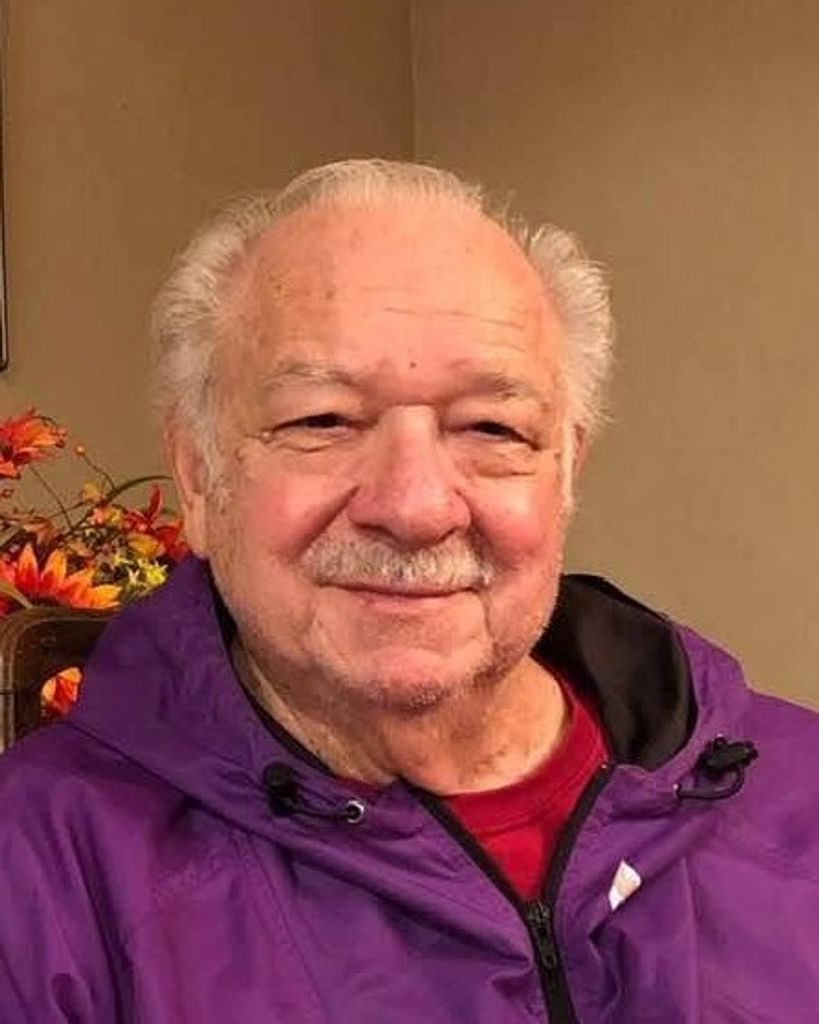
Allen Strunk (BSJ51)

Allen D. Strunk, former owner and publisher of the McCook Gazette died at age 95 in Las Vegas, Nevada.

As publisher for more than three decades, Strunk carried forward the family legacy of community journalism established by his father, Harry Strunk, while steering the Gazette into the modern era of printing and production. Under his leadership, the Gazette earned recognition among the nation’s leading small-market dailies, a reflection of both his technical foresight and his deep commitment to community journalism.

Born and raised in McCook, Strunk left his hometown to serve with the U.S. Marine Corps during the Korean War. After his military service, he pursued a journalism degree at Northwestern University’s Medill School of Journalism, one of the nation’s most respected programs. When his studies were complete, he returned to McCook to join the Gazette staff in 1953.

Six years later, he succeeded his father as publisher, guiding the newspaper through its transition from letterpress to offset printing and into a new facility in 1966. His tenure was distinguished by a commitment to innovation, journalistic integrity, and the public’s right to know.

A firm believer in open meetings and government transparency, Strunk became a leading advocate for Nebraska’s early open-meetings laws, often challenging local boards and agencies to conduct the people’s business in public view.

Yet Strunk’s influence extended far beyond the newsroom. He played a key role in McCook’s civic and economic development, leading efforts that resulted in additions to McCook College and the construction of a new YMCA and Community Hospital. As chairman of the Chamber of Commerce’s Economic Development Committee, he was instrumental in attracting new industry to the city.

A firm believer in the power of education and community leadership, Strunk later endowed a fund to recognize outstanding local educators, ensuring that his commitment to public service continued long after his retirement. His support for medical and recreational facilities, as well as his leadership on state boards including the Nebraska Game and Parks Foundation and the University of Nebraska Medical Center Board of Governors, reflected a lifetime of civic engagement.

Allen Strunk retired from publishing in 1986, but his imprint on McCook endures – in the institutions he helped build, the open government principles he championed, and the newspaper he modernized for generations to come.

https://www.mccookgazette.com/story/3065253.html

Categories
Medill News More News

Medill’s newest faculty member looks to explore rural media ecosystems

For Medill’s faculty member, assistant professor AF Battocchio, research is more than just crunching numbers.

“It has forced me to sort of step out of myself, to challenge my own assumptions and to be more open to trying to understand these stories, even if they may deviate from the stories that we see being commonly told,” they said.

Battocchio joined Medill’s faculty in the fall. Their research focuses on rural media environments in rural and post-industrial communities, specifically in Michigan’s Upper Peninsula. By combining spatial mapping and computational analysis with ethnographic field work, they look to explore how these communities obtain and navigate information in today’s changing news landscape.

Battocchio has found that these avenues range significantly.

“Sometimes that looks like traditional newspaper, sometimes that looks like a combination of newspaper and radio,” they said. “Sometimes it looks like a combination of critical actors who share information because they have a role in a nonprofit or some other non-news entity, and they help fill in some of those gaps.”

Battocchio is originally from a small town near Duluth, Minn. They were the first dual-degree graduate from Loyola University Chicago’s School of Communication, receiving a B.A. in Advertising (2019) and an M.S. in Strategic Communication (2020). They earned their Ph.D. from Michigan State University in Information and Media in Spring 2025.

As a non-traditional undergraduate student, Battocchio pulls from their personal experiences working for grassroots, community-based media organizations before attending college.

“These are all things that I think helped me understand the populations that I work with, especially in rural areas,” they said.

They hope to bring these perspectives into the Medill community to support students.

“I think it’s important to normalize the different journeys that people take,” Battocchio said. “I am really passionate about making sure that students are supported, especially if they have socioeconomic barriers to education.”

While completing their research, Battocchio found alternative news sources fill gaps in news deserts. For example, a host at a classic rock radio station in the Upper Peninsula dedicates two hours each weekday to local government programming. He invites council members and city officials to join the broadcast, and community members call in with their questions. For many in this region, it provides a chance to hear directly from community leaders and ask questions.

“These are really powerful tools, but they’re not tools that are necessarily being categorized,” they said.

For Battocchio, Medill provides a unique opportunity to explore news desert ecosystems.

“Being at Medill [with] the Local News Initiative and the Local News Accelerator opens up the opportunity for doing more collaborative partnerships and perhaps more solutions journalism-oriented initiatives that bring research and practice together,” Battocchio said.

Battocchio also encourages audiences to redefine perceptions of rurality, saying that “we tend to think about rurality as a very monolithic concept.”

“We’ve seen over the past 10 years a lot of focus on rural areas, like the revenge of the white rural voter and JD Vance’s Hillbilly Elegy, and all of those things. But I don’t always see as much of a digging into the rural experience and trying to understand rurality not from a deficit perspective,” they said.

Through their work, Battocchio aims to bridge gaps and invite the communities they cover into the conversation.

“If we’re going into a community, we’re writing about them in super academic language, and the majority of the community doesn’t have a post-secondary education,” they said. “We’re telling stories about them, without them, that are not always accessible.”

Creating this change through research starts with spending time in the community, which Battocchio does for their research. Medill allows them to be within driving distance of the areas they focus on while being supported by a welcoming community.

“I really love how Medill is a place where you have practitioners and you have researchers, and everyone gets to sort of bring who they are, the talents they have, the personalities they have,” they said.